 966535733690 +

Dust Management Plan for Construction Projects in Saudi Arabia

خطة إدارة الغبار (DMP) في المشاريع الإنشائية: الدليل الشامل للامتثال البيئي والتميز التشغيلي في السعودية
دليل عملي يوضح متى تحتاج المشاريع الإنشائية إلى خطة لإدارة الغبار، ومكوناتها، ومصادر الانبعاثات، وإجراءات التحكم والرصد والتوثيق، وعلاقتها بخطة الإدارة البيئية والتصريح البيئي.
إعداد ومراجعة: الفريق الفني لشركة البعد البيئي
آخر تحديث: يوليو 2026
وقت القراءة التقريبي: 14 دقيقة
خطة إدارة الغبار باختصار
خطة إدارة الغبار (Dust Management Plan – DMP) هي وثيقة تشغيلية تحدد مصادر الغبار والجسيمات العالقة المتوقعة داخل المشروع، والمستقبلات الحساسة المحيطة به، وإجراءات الوقاية والسيطرة، وبرنامج الرصد، والمسؤوليات، ومستويات التنبيه، وآلية التوثيق والاستجابة للشكاوى أو التجاوزات. وقد تُطلب الخطة كوثيقة مستقلة، أو كجزء من خطة الإدارة البيئية EMP، أو ضمن دراسة تقييم الأثر البيئي وشروط التصريح حسب تصنيف المشروع وموقعه ومتطلبات الجهة التنظيمية.
يشهد قطاع الإنشاءات في المملكة العربية السعودية توسعًا مستمرًا في مشروعات البنية التحتية والعمران والصناعة والخدمات. ومع زيادة أعمال الحفر والردم والهدم والنقل والتخزين، يصبح الغبار أحد أهم الجوانب البيئية التي يجب إدارتها منذ مرحلة تجهيز الموقع، وليس بعد ظهور الشكاوى أو الملاحظات الرقابية.
الإدارة الجيدة للغبار تحمي جودة الهواء وصحة العاملين والمجتمعات المحيطة، وتقلل فقد المواد واتساخ الطرق والمعدات، وتدعم التزام المشروع بمتطلبات Issuance and renewal of environmental permits. ولذلك يجب أن تكون خطة DMP عملية وقابلة للتنفيذ، مرتبطة بجدول المشروع والطقس ومسارات الحركة ومسؤوليات المقاول والمقاولين الفرعيين.
ما هي خطة إدارة الغبار (DMP)؟
خطة إدارة الغبار هي نظام مكتوب وميداني لإدارة الانبعاثات الغبارية الناتجة عن أنشطة المشروع. لا تقتصر الخطة على تحديد وسيلة رش المياه، بل تبدأ بفهم طبيعة التربة والمواد والأنشطة وسرعة الرياح والمناطق المجاورة، ثم تختار مجموعة متكاملة من الضوابط الهندسية والإدارية ومعدات الوقاية وآليات الرصد.
وتُعد الخطة الجيدة مرجعًا لمدير المشروع ومسؤول البيئة والمقاول، لأنها تجيب بوضوح عن الأسئلة الآتية: أين يتولد الغبار؟ من المسؤول عن منعه؟ ما الإجراء اليومي المطلوب؟ متى يتوقف النشاط؟ كيف تُوثق القراءات والشكاوى؟ ومتى تُراجع الإجراءات أو تُصعّد؟
هل خطة إدارة الغبار مطلوبة نظاميًا لكل مشروع إنشائي؟
لا ينبغي استخدام إجابة واحدة لجميع المشاريع. يحدد الاحتياج الفعلي وفق تصنيف النشاط، وطبيعة الموقع، وحجم الأعمال، وشروط التصريح، وأي اشتراطات إضافية يحددها المركز الوطني للرقابة على الالتزام البيئي أو الجهة المالكة للمشروع.
التوضيح النظامي الأدق: يوضح المركز الوطني للرقابة على الالتزام البيئي أن متطلبات التصريح الإنشائي تختلف حسب الفئة. تتطلب الفئة الأولى تقديم خطة إدارة بيئية، بينما تتطلب الفئة الثانية دراسة تقييم أثر بيئي، وتتطلب الفئة الثالثة تقرير نطاق ثم دراسة تقييم أثر بيئي بعد الموافقة على النطاق. لذلك قد تظهر خطة إدارة الغبار كقسم متخصص داخل EMP أو EIA، أو كخطة منفصلة إذا فرضتها طبيعة المشروع أو شروط التصريح.
يمكن الرجوع إلى المتطلبات الرسمية لخدمات التصريح الإنشائي للفئة الأولى، والتصريح الإنشائي للفئة الثانية، والتصريح الإنشائي للفئة الثالثة. كما يمكن لفريق البعد البيئي مراجعة نشاطك وتحديد ما إذا كنت تحتاج إلى DMP مستقلة أو إلى دمجها داخل Environmental Impact Assessment Study.
أهمية خطة إدارة الغبار للمشروع والبيئة
حماية جودة الهواء والصحة
تساعد الخطة على تقليل تعرض العاملين والسكان القريبين للجسيمات القابلة للاستنشاق، خاصة أثناء الحفر والهدم وقطع الخرسانة أو تداول المواد الناعمة.
تقليل المخاطر التنظيمية
يساعد التوثيق والرصد والإجراءات التصحيحية في إثبات أن المشروع يدير الانبعاثات بصورة منظمة ومتوافقة مع شروط التصريح واللوائح ذات الصلة.
استمرارية الأعمال
تحدد الخطة مسبقًا إجراءات الطقس العاصف، وتعطل معدات الرش، والشكاوى، وارتفاع القراءات، لتقليل القرارات الارتجالية أو توقف الأنشطة دون بدائل.
رفع الكفاءة التشغيلية
تساعد الإدارة المنظمة لمسارات الشاحنات والتنظيف والتخزين على تقليل فقد المواد واتساخ الطرق وتكرار أعمال التنظيف والصيانة.
أنواع الجسيمات العالقة وتأثيراتها المحتملة
تختلف أهمية الجسيمات وفق حجمها وتركيبها ومدة التعرض لها. وتشير منظمة الصحة العالمية إلى الآثار الصحية لتلوث الهواء بالجسيمات الدقيقة، بما في ذلك الارتباط بأمراض تنفسية وقلبية وعائية. ويجب تقييم التعرض المهني بصورة مستقلة عندما تتضمن الأعمال مواد تحتوي على السيليكا أو ملوثات نوعية أخرى.
| النوع | التعريف المبسط | أمثلة على المصادر | أهمية الإدارة |
|---|---|---|---|
| TSP | إجمالي الجسيمات العالقة بأحجام مختلفة، ويشمل جزءًا مرئيًا يترسب على الأسطح. | الطرق الترابية، أكوام التربة، التحميل والتفريغ. | الرؤية، اتساخ الممتلكات، تراكم الأتربة، وإعادة التطاير. |
| PM10 | جسيمات يقل قطرها الديناميكي الهوائي أو يساوي 10 ميكرومتر. | الحفر، الردم، التكسير، حركة المركبات. | يمكن استنشاقها ووصولها إلى أجزاء من الجهاز التنفسي. |
| PM2.5 | جسيمات دقيقة يقل قطرها أو يساوي 2.5 ميكرومتر. | الاحتراق، بعض أعمال القطع والهدم، المعدات والآليات. | قد تخترق بعمق أكبر إلى الرئتين وترتبط بتأثيرات صحية أكثر خطورة. |
| السيليكا البلورية القابلة للاستنشاق | غبار دقيق قد ينتج عند قطع أو طحن أو تكسير مواد تحتوي على السيليكا. | الخرسانة، الحجر، الطوب وبعض مواد البناء. | يتطلب تقييمًا وضوابط مهنية خاصة وفق طبيعة المهمة والتعرض. |
أهم مصادر الغبار في المشاريع الإنشائية
| النشاط أو المصدر | كيف يتولد الغبار؟ | إجراءات السيطرة الأساسية | التوثيق المقترح |
|---|---|---|---|
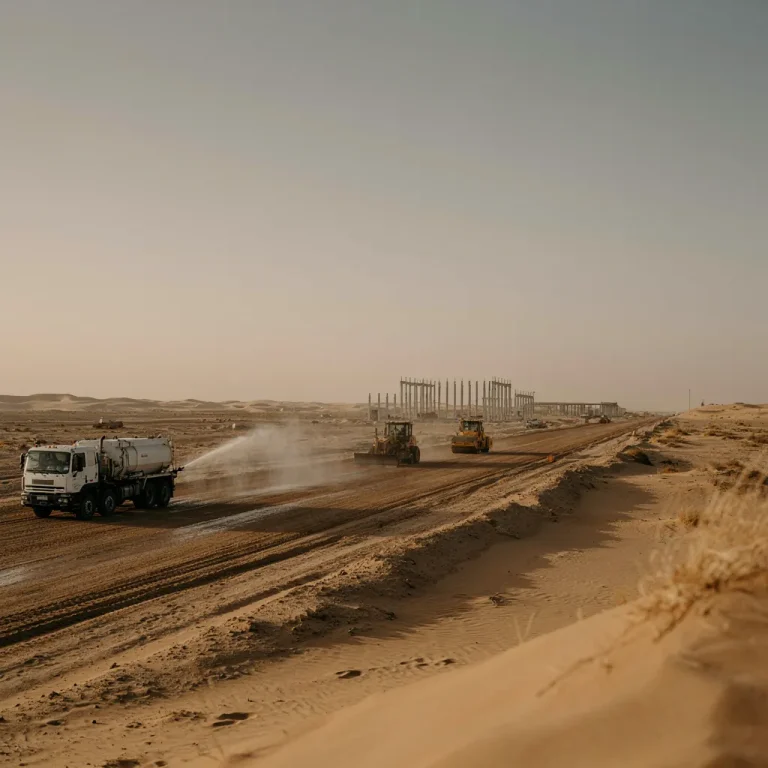
| الحفر والردم والتسوية | تفكيك التربة وتحريكها مع تأثير الرياح وجفاف السطح. | ترطيب مناسب، تقليل مساحة العمل المكشوفة، جدولة الأعمال، تثبيت مؤقت للسطح. | سجل رش، صور، حالة الطقس، مناطق العمل اليومية. |
| الطرق غير المعبدة | إعادة تطاير الأتربة بسبب سرعة وتكرار حركة المركبات. | حدود سرعة، تحسين السطح، رش أو مثبتات مناسبة، تنظيف العجلات. | سجل مرور، تفتيش الطرق، صيانة نقاط الغسيل. |
| أكوام المواد السائبة | تعرية سطح الأكوام بفعل الرياح أو أثناء التحميل. | تغطية، خفض الارتفاع، حواجز رياح، ترطيب مدروس، اختيار موقع التخزين. | خريطة التخزين، قائمة تفتيش الأغطية والحواجز. |
| الهدم والتكسير والقطع | تفتت الخرسانة أو الحجر والمواد الجافة إلى جسيمات دقيقة. | رش عند نقطة التولد، عزل المنطقة، شفط موضعي عند ملاءمته، معدات مناسبة. | تصريح عمل، تقييم مهمة، سجل فحص معدات التحكم. |
| نقل المواد خارج الموقع | تساقط أو تطاير الحمولة وخروج الطين أو الأتربة على الطرق العامة. | تغطية الشاحنات، عدم التحميل الزائد، غسل العجلات، تنظيف المداخل. | فحص بوابة الخروج، صور الحمولة، سجل تنظيف الطريق. |
مكونات خطة إدارة الغبار الاحترافية
تختلف التفاصيل من مشروع إلى آخر، لكن الخطة القابلة للتطبيق يجب أن تشمل العناصر التالية:
وصف المشروع ونطاق الخطة
الموقع، مراحل التنفيذ، مدة الأعمال، المقاولون، المعدات، ساعات التشغيل والأنشطة المنتجة للغبار.
خط الأساس والمستقبلات الحساسة
تحديد الأحياء والمدارس والمستشفيات والطرق والمرافق والمواقع البيئية الحساسة واتجاهات الرياح السائدة.
Identifying sources of emissions
ربط كل نشاط بمصدر الغبار ونوع الجسيمات وفترة الحدوث واحتمالية انتقالها خارج حدود المشروع.
إجراءات التحكم حسب النشاط
تحديد الإجراء الأساسي والاحتياطي، ومتى يُستخدم، والمسؤول عن تشغيله وفحصه وصيانته.
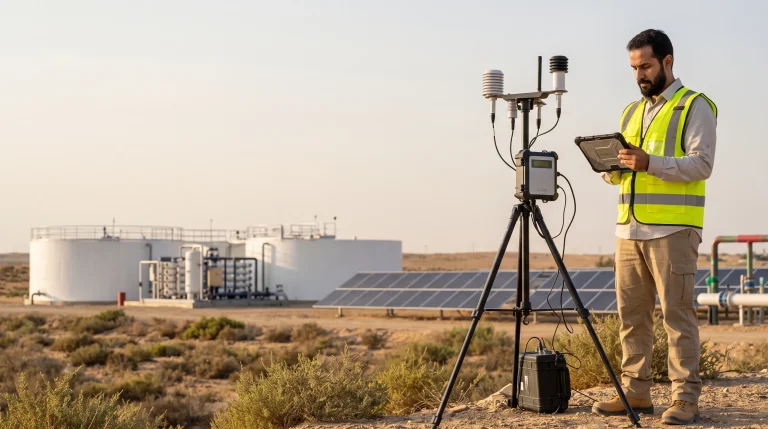
برنامج الرصد والتفتيش
المواقع، الأجهزة، التواتر، فحص الغبار المرئي، متابعة الطقس، سجلات المعايرة ومستويات التنبيه.
Roles and responsibilities:
مسؤول البيئة، مدير الموقع، مشرفو المناطق، السائقون، المقاولون الفرعيون، ومسار التصعيد الإداري.
الاستجابة للشكاوى والحوادث
قناة الاستقبال، زمن الاستجابة، التحقيق، الإجراء التصحيحي، التواصل مع المتضرر وإغلاق الحالة.
السجلات والمراجعة والتحسين
حفظ القراءات والصور والتدريب والتفتيش والإجراءات التصحيحية، مع مراجعة دورية لفعالية الخطة.
إجراءات التحكم في الغبار: من المصدر إلى حدود الموقع
1. تجنب الانبعاث أو تقليله من البداية
- تقليل مساحة التربة المكشوفة وفتح مناطق العمل تدريجيًا بدل كشف الموقع بالكامل.
- اختيار طرق تنفيذ ومعدات تنتج غبارًا أقل متى كان ذلك ممكنًا.
- تنسيق التوريد لتقليل بقاء المواد السائبة في الموقع لفترات طويلة.
- تأجيل الأعمال الأعلى انبعاثًا عند الرياح القوية أو الظروف غير الملائمة وفق حدود الخطة.
2. الضوابط الهندسية
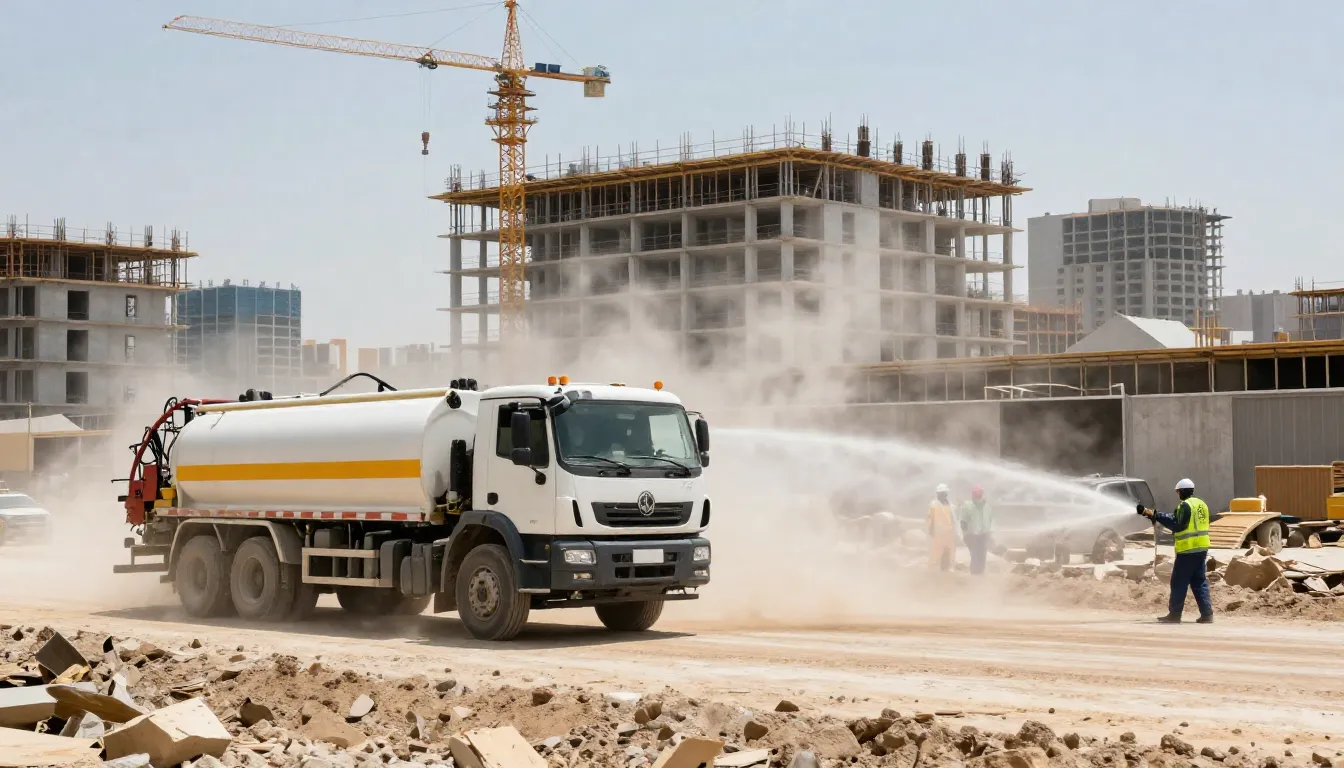
- الرش أو الرذاذ عند نقطة تولد الغبار مع تجنب الإفراط الذي يسبب جريانًا ملوثًا أو هدرًا للمياه.
- تغطية الأكوام والشاحنات والمواد الناعمة، واستخدام حواجز رياح مصممة بما يتناسب مع الموقع.
- توفير نقاط غسل عجلات فعالة ومنطقة تصريف وإدارة للرواسب الناتجة.
- استخدام أنظمة شفط أو جمع غبار أو كبائن مغلقة ومرشحة عندما يناسب النشاط.
- استخدام مثبتات تربة ملائمة بعد مراجعة سلامتها البيئية وطريقة تطبيقها وتأثيرها المحتمل على التربة والمياه.
3. الضوابط الإدارية
- تحديد سرعات المركبات ومساراتها وتوقيت دخولها وخروجها.
- فحص يومي لمصادر الغبار والحواجز والأغطية ومعدات الرش.
- تدريب العمال والسائقين والمقاولين الفرعيين على الإجراءات ومستويات التصعيد.
- إيقاف أو تعديل النشاط عند فشل وسيلة التحكم أو تجاوز مستوى التنبيه المحدد في الخطة.
وتعرض إرشادات التحكم في غبار السيليكا بقطاع الإنشاءات أمثلة فنية مثل الرش بالمياه وتجميع الغبار والعزل. ويُستفاد منها كمرجع فني دولي، لا كبديل عن الأنظمة السعودية أو تقييم مخاطر المشروع.
الرصد البيئي ومستويات التنبيه والاستجابة
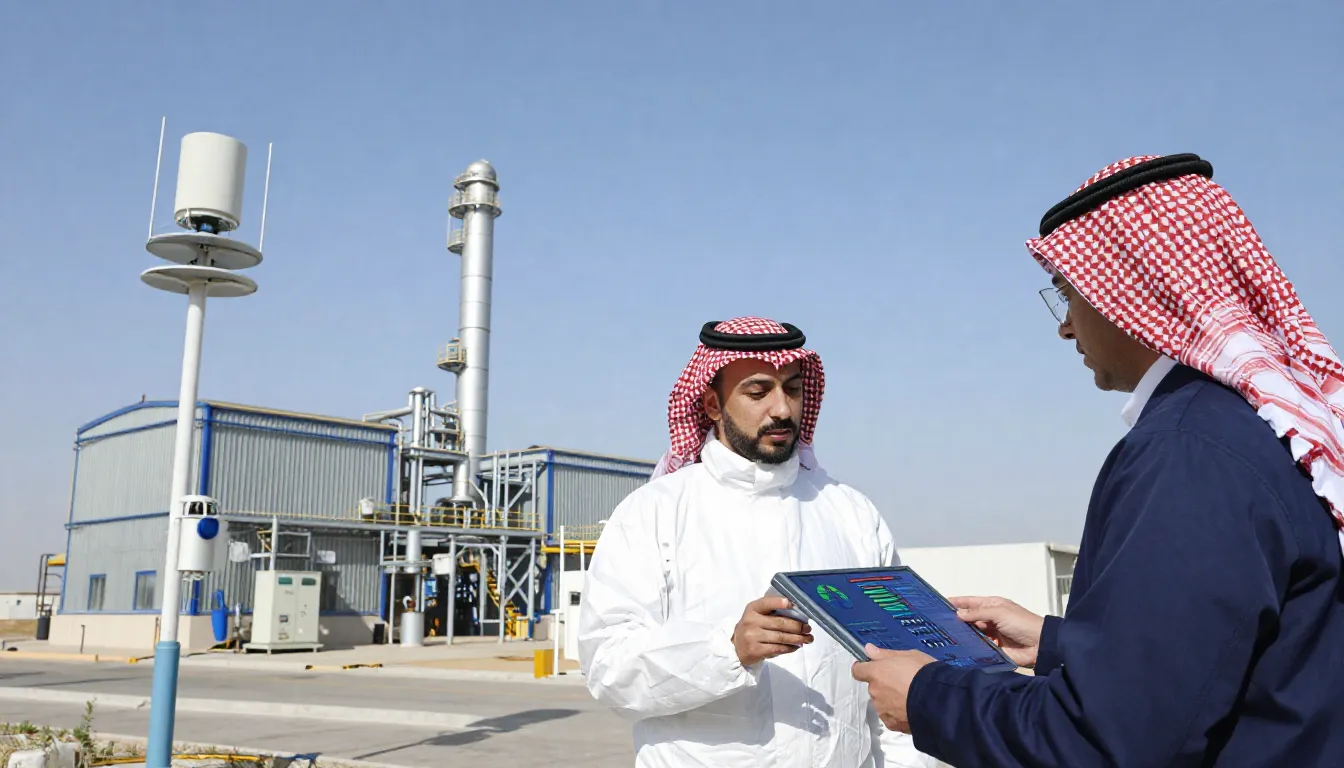
لا يوجد رقم واحد يصلح لجميع المواقع دون الرجوع إلى شروط التصريح واللائحة ونوع الجهاز ومدة المتوسط وموقع القياس. لذلك يجب أن تحدد الخطة بوضوح ما إذا كان الرصد بصريًا أو مستمرًا أو دوريًا، وما الملوثات المقاسة، وكيفية ضبط الجودة والمعايرة، ومن يراجع البيانات.
يجب أن تتوافق أعمال رصد جودة الهواء مع متطلبات اللائحة التنفيذية لجودة الهواء في المملكة، والاستعانة بجهة مرخصة عندما تتطلب طبيعة القياس أو الاشتراطات ذلك. كما أصدر المركز دليلًا استرشاديًا لإعداد وتنفيذ تقارير المراقبة البيئية يركز على جودة التقارير والتوثيق وفعالية المتابعة.
| المستوى | المؤشر المحتمل | الاستجابة المقترحة |
|---|---|---|
| اعتيادي | لا توجد انبعاثات مرئية خارج منطقة النشاط، والضوابط تعمل. | استمرار النشاط مع التفتيش والتوثيق المعتاد. |
| تنبيه | زيادة الغبار المرئي، تغير اتجاه الرياح، أو اقتراب قراءة محددة في الخطة من مستوى الإجراء. | تعزيز الرش أو التغطية، خفض السرعة، مراجعة مصدر الانبعاث وتكثيف المتابعة. |
| إجراء تصحيحي | فشل وسيلة التحكم، استمرار الغبار خارج الحدود، شكوى موثوقة، أو تجاوز معيار/شرط مطبق. | إيقاف أو تعديل النشاط المتسبب، التحقيق، تنفيذ الإجراء، التحقق من الفعالية وتوثيق الإغلاق. |
| Emergency | عاصفة شديدة، تعطل واسع للأنظمة، أو تأثير محتمل كبير على مستقبل حساس. | تفعيل خطة الطوارئ، تأمين المواد والمعدات، تعليق الأنشطة عالية الانبعاث وإبلاغ الإدارة والجهات عند اللزوم. |
مصفوفة تقييم مخاطر الغبار
تربط المصفوفة بين احتمال الانبعاث وشدة التأثير. يرتفع مستوى الخطر عند زيادة حجم الأعمال، وجفاف التربة، وقوة الرياح، وطول مسار النقل، وقرب المدارس أو المساكن أو المستشفيات، أو وجود عمليات قطع وتكسير لمواد دقيقة.
- خطر منخفض: نشاط محدود، قصير، بعيد عن المستقبلات الحساسة، مع ضوابط فعالة.
- خطر متوسط: نشاط متكرر أو قريب نسبيًا من الحدود ويحتاج إلى مراقبة وضوابط إضافية.
- خطر مرتفع: هدم أو تكسير واسع، رياح قوية، شكاوى سابقة، أو مستقبلات شديدة الحساسية.
- خطر حرج: احتمال تأثير كبير أو تجاوز متكرر يتطلب تغيير طريقة العمل أو تعليق النشاط حتى تنفيذ الضوابط.
مؤشرات الأداء وقائمة التفتيش اليومية
| Index | طريقة القياس | الهدف التشغيلي المقترح |
|---|---|---|
| نسبة تنفيذ جولات التفتيش | الجولات المنفذة ÷ الجولات المخططة | 100% وفق البرنامج المعتمد بالمشروع |
| زمن إغلاق الملاحظات | المدة من تسجيل الملاحظة إلى التحقق من الإغلاق | حسب درجة الخطورة وحدود الخطة |
| جاهزية معدات التحكم | عدد المعدات الصالحة ÷ المعدات المطلوبة | توافر كامل قبل بدء النشاط |
| الشكاوى المتعلقة بالغبار | عدد الشكاوى المؤكدة وتحليل أسبابها | الاتجاه إلى الصفر ومنع التكرار |
| الالتزام بسرعات الموقع | جولات ميدانية أو وسائل متابعة مناسبة | وفق حدود السرعة المعتمدة |
قائمة فحص مختصرة قبل بدء العمل
- مراجعة اتجاه الرياح والظروف الجوية المتوقعة.
- التأكد من جاهزية المياه أو وسيلة التحكم البديلة.
- فحص الأغطية والحواجز ونقاط غسل العجلات.
- التأكد من تغطية الشاحنات وعدم التحميل الزائد.
- مراجعة نظافة المداخل والطرق المحيطة.
- إبلاغ فريق العمل بالإجراءات الخاصة بالنشاط اليومي.
- تسجيل الملاحظات والصور والإجراءات التصحيحية في السجل البيئي للمشروع.
متى يجب تحديث خطة إدارة الغبار؟
الخطة وثيقة حية وليست نموذجًا ثابتًا. يجب مراجعتها عند تغيير مرحلة التنفيذ، أو إضافة معدات أو مقاول جديد، أو تعديل مسارات النقل، أو ظهور مستقبل حساس جديد، أو تكرار الشكاوى، أو تغير شروط التصريح، أو اكتشاف أن الإجراء الحالي لا يحقق السيطرة المطلوبة.
كما يُنصح بمراجعة الخطة بعد أي حادث أو تجاوز، وبعد العواصف الشديدة، وقبل بدء أعمال الهدم أو القطع أو التكسير عالية الانبعاث. ويمكن ربط المراجعة مع إجراءات an environmental permit can be issued أو تحديث خطة الإدارة البيئية الشاملة.
كيف تساعدك شركة البعد البيئي في إعداد خطة إدارة الغبار؟
تساعد شركة البعد البيئي المشاريع الإنشائية والمنشآت في المملكة على تحويل متطلبات إدارة الغبار إلى إجراءات واضحة قابلة للتنفيذ، بدل الاعتماد على نص عام لا يعكس ظروف الموقع. تبدأ الخدمة بمراجعة النشاط والموقع والتصنيف والوثائق المتاحة، ثم تحديد نطاق الخطة واحتياجات الرصد والتسليمات المناسبة.
- مراجعة نوع المشروع ومراحله وشروط التصريح ذات الصلة.
- تحديد مصادر الغبار والمستقبلات الحساسة ومسارات الانتقال.
- تصميم ضوابط هندسية وإدارية متناسبة مع المخاطر والموارد المتاحة.
- إعداد برنامج تفتيش ورصد وسجلات ومسؤوليات ومستويات تصعيد.
- ربط DMP بخطة الإدارة البيئية أو دراسة الأثر البيئي عند الحاجة.
- مراجعة الخطة عند تغير نطاق العمل أو ظهور ملاحظات ميدانية.
للتعرف على نطاق الشركة وخدماتها وقطاعات العمل، راجع صفحة من نحن في شركة البعد البيئي وصفحة Sectors We Serve.
الأسئلة الشائعة حول خطة إدارة الغبار في السعودية
ما هي خطة إدارة الغبار DMP؟
هي خطة تشغيلية تحدد مصادر الغبار في المشروع، والمناطق الحساسة، وإجراءات المنع والسيطرة، وبرنامج الرصد، والمسؤوليات، ومستويات التنبيه، والسجلات والاستجابة للشكاوى أو التجاوزات.
هل DMP مطلوبة لكل مشروع إنشائي؟
ليس بالصيغة نفسها لكل مشروع. قد تكون خطة مستقلة، أو جزءًا من خطة الإدارة البيئية، أو قسمًا في دراسة تقييم الأثر البيئي، وفق تصنيف النشاط وشروط التصريح والموقع وحجم الأعمال.
ما الفرق بين DMP وEMP؟
خطة DMP تركز على الغبار والجسيمات العالقة، بينما تغطي خطة الإدارة البيئية EMP نطاقًا أوسع يشمل الهواء والنفايات والمياه والضوضاء والمواد الخطرة والطوارئ والتدريب والتوثيق. وغالبًا تكون DMP جزءًا متخصصًا من EMP.
ما أهم وسائل التحكم في الغبار؟
تشمل تقليل مساحة العمل المكشوفة، الرش عند المصدر، تغطية المواد والشاحنات، تثبيت الطرق، غسل العجلات، خفض السرعة، حواجز الرياح، الشفط أو جمع الغبار، وجدولة الأنشطة وفق الطقس.
هل رش المياه وحده كافٍ؟
لا. قد يكون فعالًا لبعض الأنشطة، لكنه يجب أن يكون جزءًا من مجموعة ضوابط تشمل تقليل المصدر والتغطية والسرعات والتنظيف والصيانة والرصد. كما يجب تجنب الإفراط في المياه وما ينتج عنه من جريان أو هدر.
أين توضع أجهزة أو نقاط رصد الغبار؟
تحدد المواقع بعد دراسة مصادر الانبعاث واتجاهات الرياح وحدود الموقع والمستقبلات الحساسة. وقد تشمل نقطة في اتجاه الرياح القادمة، وأخرى باتجاه خروجها، ونقاطًا قرب الأنشطة أو المستقبلات المهمة وفق خطة الرصد.
ما الذي يجب توثيقه يوميًا؟
حالة الطقس، الأنشطة المنتجة للغبار، جولات التفتيش، تشغيل معدات التحكم، صور الموقع، أعمال تنظيف الطرق، ملاحظات الغبار المرئي، الشكاوى، القراءات المتاحة، والإجراءات التصحيحية وإغلاقها.
كم تستغرق عملية إعداد الخطة؟
تعتمد المدة على حجم المشروع وتعدد الأنشطة وتوفر المخططات والبيانات والحاجة إلى زيارة موقعية أو رصد. يمكن تحديد مدة دقيقة بعد مراجعة نطاق المشروع وشروط التصريح والتسليمات المطلوبة.
المصادر والمراجع
- المركز الوطني للرقابة على الالتزام البيئي – متطلبات التصريح الإنشائي للفئة الأولى.
- المركز الوطني للرقابة على الالتزام البيئي – متطلبات التصريح الإنشائي للفئة الثانية.
- المركز الوطني للرقابة على الالتزام البيئي – متطلبات التصريح الإنشائي للفئة الثالثة.
- اللائحة التنفيذية لجودة الهواء في المملكة العربية السعودية.
- Guidelines for preparing and implementing environmental monitoring reports.
- منظمة الصحة العالمية – تلوث الهواء الخارجي والصحة.
- OSHA – ضوابط التعرض للسيليكا في أعمال الإنشاء.
هل تحتاج خطة إدارة غبار مناسبة لموقع مشروعك؟
أرسل نوع المشروع والمدينة ومرحلة التنفيذ، وسيقوم فريق البعد البيئي بمراجعة الاحتياج الأولي وتحديد ما إذا كانت DMP مطلوبة كخطة مستقلة أو ضمن خطة الإدارة البيئية أو دراسة الأثر البيئي.
تواصل الآن عبر واتسابتحديد المتطلبات النهائية يعتمد على تصنيف النشاط، موقع المشروع، وشروط التصريح الصادرة عن الجهة المختصة.
Dust Management Plan (DMP) for Construction Projects: A Complete Saudi Compliance and Operational Guide
A practical guide explaining when construction projects need a Dust Management Plan, its core components, emission sources, control measures, monitoring, documentation, and its relationship with environmental permits, EMPs, and EIAs.
Prepared and reviewed by: Albuad Environmental Technical Team
Last updated: July 2026
Estimated reading time: 14 minutes
Dust Management Plan: Quick Answer
A Dust Management Plan (DMP) is an operational document that identifies expected dust and particulate sources, nearby sensitive receptors, preventive and control measures, monitoring arrangements, responsibilities, action levels, records, and response procedures. Depending on the project classification, location, permit conditions, and regulator requirements, a DMP may be required as a standalone document or as a dedicated section of an Environmental Management Plan (EMP) or Environmental Impact Assessment.
Saudi Arabia’s construction sector continues to expand across infrastructure, urban development, industry, logistics, and services. Excavation, grading, demolition, vehicle movement, stockpiling, and material handling can generate significant dust if controls are not planned before site mobilization.
Effective dust management protects workers, neighboring communities, road users, equipment, and local air quality. It also supports the project’s broader environmental permit requirements. A useful DMP must therefore be site-specific, connected to the construction schedule and weather, and clear about contractor and subcontractor responsibilities.
What Is a Dust Management Plan (DMP)?
A Dust Management Plan is a written and field-based system for controlling dust emissions generated by project activities. It goes beyond specifying water spraying. The plan evaluates soil and material characteristics, work methods, weather, nearby receptors, haul routes, equipment, and the likely movement of emissions, then selects an integrated set of engineering, administrative, monitoring, and occupational controls.
A practical DMP tells the project team where dust may be generated, who is responsible for controlling it, which daily checks are required, when work must be modified or stopped, how complaints and monitoring data are handled, and how corrective actions are verified and closed.
Is a Dust Management Plan Required for Every Construction Project?
There is no single answer for every site. The actual requirement depends on the environmental classification of the activity, project size, location, permit conditions, work methods, and any additional requirements specified by the National Center for Environmental Compliance (NCEC) or the project owner.
Accurate regulatory position: NCEC construction permit requirements differ by category. Category 1 requires an Environmental Management Plan. Category 2 requires a Category 2 Environmental Impact Assessment. Category 3 requires an EIA scoping report followed by a Category 3 EIA after scope approval. A DMP may therefore be included as a focused section within an EMP or EIA, or requested as a separate plan when project risks or permit conditions require it.
Official requirements can be reviewed through the NCEC pages for Category 1 construction permits, Category 2 construction permits, and Category 3 construction permits. Albuad can also review whether dust controls should be a standalone deliverable or integrated into an Environmental Impact Assessment.
Why a Dust Management Plan Matters
Air Quality and Health Protection
The plan reduces exposure to inhalable particles during excavation, demolition, concrete cutting, crushing, and dry material handling.
Lower Regulatory Risk
Monitoring, inspections, and corrective-action records help demonstrate that emissions are being managed in accordance with applicable permit conditions and regulations.
Business Continuity
Predefined responses for strong winds, equipment failure, complaints, or elevated readings reduce reactive decisions and unplanned disruption.
Operational Efficiency
Organized haul routes, stockpile controls, wheel washing, and cleaning programs can reduce material loss, road soiling, and maintenance needs.
Particulate Types and Potential Impacts
The importance of particulate matter depends on particle size, composition, and exposure duration. The World Health Organization describes the health effects of particulate air pollution, including respiratory and cardiovascular impacts. Occupational exposure must also be assessed separately where tasks involve crystalline silica or other specific hazardous materials.
| Type | Simplified definition | Typical sources | Why it matters |
|---|---|---|---|
| TSP | Total suspended particles across a broad size range, including visible dust that settles on surfaces. | Unpaved roads, stockpiles, loading and unloading. | Visibility, nuisance, surface deposition, and re-suspension. |
| PM10 | Particles with an aerodynamic diameter of 10 micrometres or less. | Excavation, filling, crushing, and vehicle movement. | Can be inhaled and enter parts of the respiratory system. |
| PM2.5 | Fine particles with an aerodynamic diameter of 2.5 micrometres or less. | Combustion and some cutting, demolition, and equipment activities. | Can penetrate deeper into the lungs and is associated with more serious health effects. |
| Respirable crystalline silica | Fine dust generated when silica-containing materials are cut, ground, drilled, or crushed. | Concrete, stone, bricks, and some construction products. | Requires task-specific occupational risk assessment and controls. |
Main Dust Sources on Construction Sites
| Activity or source | How dust is generated | Core control measures | Suggested records |
|---|---|---|---|
| Excavation, grading, and backfilling | Soil disturbance combined with dry surfaces and wind. | Targeted wetting, limiting exposed areas, scheduling, temporary stabilization. | Watering log, photographs, weather, daily work areas. |
| Unpaved haul roads | Re-suspension caused by vehicle speed and traffic frequency. | Speed limits, surface improvement, suitable watering or suppressants, wheel cleaning. | Traffic and road inspection records. |
| Bulk material stockpiles | Wind erosion and disturbance during loading or unloading. | Covers, reduced pile height, wind barriers, controlled wetting, suitable siting. | Storage plan and cover/barrier inspection checklist. |
| Demolition, crushing, and cutting | Fragmentation of concrete, stone, and dry materials into fine particles. | Water at source, segregation, local extraction where suitable, appropriate equipment. | Work permit, task risk assessment, equipment checks. |
| Off-site material transport | Uncovered loads, overloading, and mud or dust tracked onto public roads. | Covered loads, no overfilling, wheel washing, entrance and road cleaning. | Gate checks, load photographs, road cleaning log. |
Core Components of a Professional DMP
Although the level of detail varies by project, an implementable plan should include the following:
Project Description and Plan Scope
Location, construction phases, duration, contractors, equipment, operating hours, and dust-generating activities.
Baseline and Sensitive Receptors
Nearby homes, schools, hospitals, roads, utilities, environmentally sensitive areas, and prevailing wind directions.
Emission Source Inventory
Each activity linked to its dust source, particle type, occurrence period, and likelihood of off-site movement.
Activity-Specific Controls
Primary and backup controls, activation criteria, responsible persons, inspection, and maintenance requirements.
Monitoring and Inspection Program
Locations, instruments, frequency, visible-dust checks, weather monitoring, calibration records, and action levels.
Roles and Responsibilities
Environmental officer, site manager, area supervisors, drivers, subcontractors, and management escalation path.
Complaints and Incident Response
Reporting channel, response time, investigation, corrective action, stakeholder communication, and case closure.
Records, Review, and Improvement
Monitoring data, photographs, training, inspections, corrective actions, and periodic effectiveness reviews.
Dust Control Measures: From Source to Site Boundary
1. Avoid or Minimize Dust Generation
- Limit exposed soil and open work areas in phases rather than disturbing the full site at once.
- Select lower-dust work methods and equipment where reasonably practicable.
- Coordinate deliveries to reduce long-term storage of loose dry materials.
- Postpone the highest-emission tasks during strong winds or unsuitable conditions according to plan triggers.
2. Engineering Controls
- Apply water or mist at the point of generation without creating excessive runoff or water waste.
- Cover stockpiles, trucks, and fine materials and use appropriately designed wind barriers.
- Provide effective wheel-washing facilities with suitable sediment and wastewater management.
- Use local extraction, dust collection, enclosed or filtered cabs where appropriate.
- Use suitable soil stabilizers only after reviewing environmental safety, application method, and potential soil or water impacts.
3. Administrative Controls
- Set and enforce vehicle speeds, routes, and delivery times.
- Conduct daily inspections of dust sources, covers, barriers, and suppression equipment.
- Train workers, drivers, and subcontractors on controls and escalation requirements.
- Stop or modify work when a control fails or an action level defined in the DMP is reached.
The OSHA construction silica control standard provides technical examples such as water delivery, dust collection, and operator isolation. It is useful as an international technical reference but does not replace Saudi regulations or a project-specific risk assessment.
Environmental Monitoring, Action Levels, and Response
No single monitoring number is appropriate for every site without considering permit conditions, the applicable regulation, averaging period, instrument type, pollutant, and monitoring location. The DMP should specify whether monitoring is visual, continuous, or periodic; which parameters are measured; how quality control and calibration are managed; and who reviews the data.
Air monitoring activities should align with the Saudi Executive Regulation for Air Quality, including the use of licensed service providers where required. NCEC has also published guidance for preparing and implementing environmental monitoring reports, emphasizing effective reporting and documentation.
| Level | Possible indicator | Suggested response |
|---|---|---|
| Normal | No visible emissions leaving the activity area and controls are operating. | Continue work with routine inspection and recordkeeping. |
| Alert | Increased visible dust, wind shift, or a plan-defined reading approaching its action level. | Strengthen spraying or covering, reduce speed, identify the source, and increase monitoring. |
| Corrective action | Control failure, continuing off-site dust, verified complaint, or exceedance of an applicable limit or condition. | Stop or modify the source activity, investigate, correct, verify effectiveness, and document closure. |
| Emergency | Severe dust storm, widespread system failure, or potentially significant impact on a sensitive receptor. | Activate emergency arrangements, secure materials, suspend high-emission activities, and notify management or authorities when required. |
Dust Risk Assessment Matrix
The risk matrix combines emission likelihood with impact severity. Risk increases with larger work areas, dry soil, strong winds, long haul routes, nearby homes, schools or hospitals, previous complaints, and high-energy cutting, crushing, or demolition activities.
- Low: Limited, short-duration work away from sensitive receptors with effective controls.
- Medium: Repeated activity or work relatively close to boundaries requiring enhanced controls and checks.
- High: Major demolition or crushing, strong winds, prior complaints, or highly sensitive receptors.
- Critical: Potential for significant impact or repeated exceedance requiring a change in method or suspension until controls are effective.
Performance Indicators and Daily Inspection Checklist
| Indicator | Measurement method | Suggested operational target |
|---|---|---|
| Inspection completion rate | Completed inspections ÷ planned inspections | 100% according to the approved project schedule |
| Corrective-action closure time | Time from issue logging to verified closure | According to risk classification and plan deadlines |
| Control-equipment availability | Serviceable units ÷ required units | Full availability before work starts |
| Dust-related complaints | Verified complaint count and root-cause review | Trend toward zero with recurrence prevention |
| Site speed compliance | Field checks or suitable monitoring tools | Compliance with approved site limits |
Short Pre-Work Checklist
- Review expected weather and wind direction.
- Confirm water supply or backup suppression method.
- Inspect covers, barriers, and wheel-washing facilities.
- Confirm trucks are covered and not overloaded.
- Check entrances and surrounding roads for soil or dust.
- Brief the workforce on controls for the day’s activities.
- Record observations, photographs, and corrective actions in the project’s environmental register.
When Should the Dust Management Plan Be Updated?
A DMP is a living document, not a fixed template. It should be reviewed when the construction phase changes, new equipment or subcontractors are introduced, haul routes are modified, new sensitive receptors are identified, complaints recur, permit conditions change, or existing controls are shown to be ineffective.
The plan should also be reviewed after an incident or exceedance, following severe dust events, and before major demolition, cutting, or crushing work. Reviews can be coordinated with the environmental permit process or updates to the wider EMP.
How Albuad Environmental Can Support Your Project
Albuad Environmental supports construction projects and facilities in Saudi Arabia by converting dust-management requirements into clear, site-specific actions rather than generic text. The process begins with a review of the activity, location, environmental classification, permit documents, and available project information, followed by defining the plan scope, monitoring needs, and suitable deliverables.
- Review project type, phases, and relevant permit conditions.
- Identify dust sources, sensitive receptors, and transport pathways.
- Design engineering and administrative controls proportionate to risk and available resources.
- Prepare inspection, monitoring, recordkeeping, responsibility, and escalation procedures.
- Integrate the DMP with the EMP or EIA where required.
- Review the plan when the scope changes or field observations indicate a need for improvement.
Learn more about the company through About Albuad Environmental and the sectors we serve.
Frequently Asked Questions About Dust Management Plans in Saudi Arabia
What is a Dust Management Plan?
It is an operational plan that identifies dust sources, sensitive receptors, prevention and control measures, monitoring, responsibilities, action levels, records, and complaint or exceedance response procedures.
Is a DMP required for every construction project?
Not in the same form for every project. It may be standalone, included in an EMP, or included in an EIA depending on environmental classification, permit conditions, location, and work scale.
What is the difference between a DMP and an EMP?
A DMP focuses on dust and particulate emissions. An EMP covers a wider range of aspects such as air, waste, water, noise, hazardous materials, emergency response, training, and records. The DMP is often a specialized component of the EMP.
What are the main dust-control methods?
They include limiting exposed areas, source watering, covering stockpiles and trucks, road stabilization, wheel washing, lower vehicle speeds, wind barriers, dust collection, cleaning, and weather-based scheduling.
Is water spraying alone enough?
No. Water can be effective for some tasks but should form part of an integrated control system that also includes source reduction, covering, speed management, cleaning, maintenance, and monitoring.
Where should dust monitors be located?
Locations are selected after reviewing emission sources, wind directions, site boundaries, and sensitive receptors. They may include upwind and downwind points and positions near key activities or receptors, depending on the monitoring plan.
What should be recorded every day?
Weather, dust-generating activities, inspections, control-equipment operation, site photographs, road cleaning, visible dust observations, complaints, available readings, corrective actions, and verified closure.
How long does it take to prepare a DMP?
The duration depends on project size, activity complexity, available drawings and data, and whether a site visit or monitoring design is required. A reliable schedule can be confirmed after reviewing the project scope and permit requirements.
Sources and References
- NCEC – Category 1 Construction Permit Requirements.
- NCEC – Category 2 Construction Permit Requirements.
- NCEC – Category 3 Construction Permit Requirements.
- Saudi Executive Regulation for Air Quality.
- NCEC Guidance for Environmental Monitoring Reports.
- World Health Organization – Ambient Air Pollution and Health.
- OSHA – Respirable Crystalline Silica in Construction.
Does Your Project Need a Site-Specific Dust Management Plan?
Send us the project type, city, and construction phase. Albuad Environmental will review the initial requirement and clarify whether the DMP should be standalone or integrated into the EMP or EIA.
Contact Us on WhatsAppFinal requirements depend on activity classification, project location, and permit conditions issued by the competent authority.
🌿
The content was reviewed by a team of environmental experts.
Environmental content at Al-Ba’ad Al-Bia’i Environmental Consulting Company is prepared and reviewed by a team of specialists in environmental studies, environmental impact assessment, environmental compliance, and environmental monitoring.
Meet the expert team