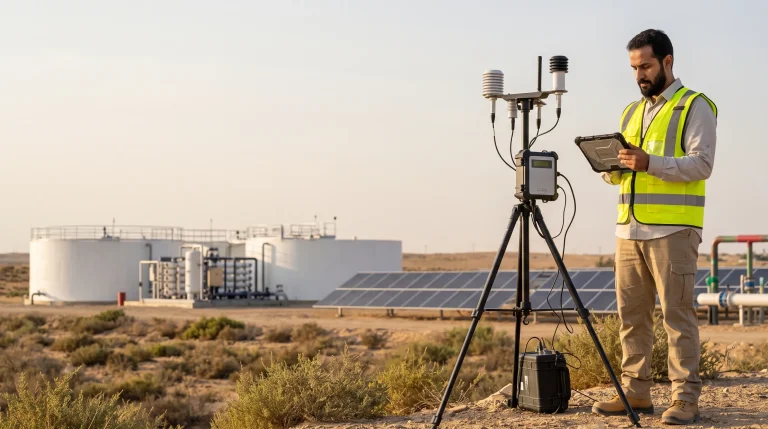
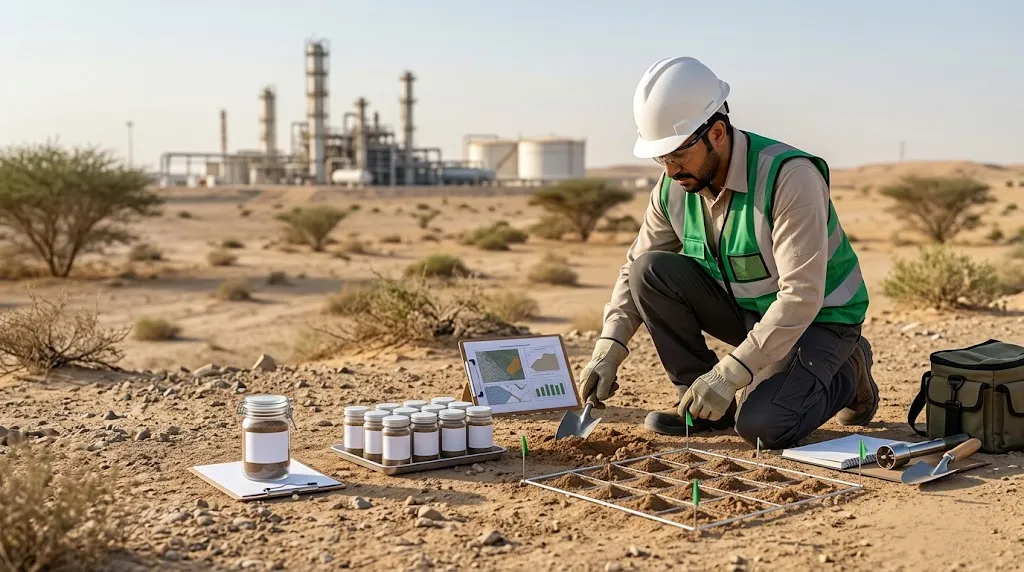

Environmental sampling types vary based on what you want the result to represent. Choose a Grab Sample if the question is about a specific point or moment in time, a Composite Sample if you need to estimate an average over a period or within a specific range, and the Incremental Sampling Methodology (ISM) to estimate the average concentration of a contaminant in a specific volume of soil. The selection process begins by identifying the decision that the data will support, then verifying permit requirements and the suitability of the analysis and preservation method.
What is the difference between grab, composite, and incremental samples?
| Method | The question you are answering | Example of use | Result limitations |
|---|---|---|---|
| Grab or Discrete sample | What is the condition at a specific point or time? | Checking discharge during an operational event, or taking a soil sample at a specific depth near a fuel line. | Generalizing the result depends on the design of the sampling network and the timing of collection. |
| Composite sample | What is the average concentration over a period or within a known range? | Estimating the average concentration of a pollutant in wastewater during an operational cycle. | The average depends on the integration method, and the result does not show the concentration of each part separately. |
| Incremental Sampling Methodology (ISM) | What is the average concentration in a specific volume of soil? | Estimating the average concentration of a metal in the topsoil layer within an exposure area. | The result is interpreted within the limits of the decision unit and does not identify the location of the highest concentration within it. |
When should you use a Grab Sample?
A grab sample is used when you need to link a laboratory result to a specific location or time. In wastewater, the goal might be to check the discharge during a wash cycle or when starting a production line. In soil, a discrete sample is used to measure the concentration in a portion taken from a known location and depth. Discrete results are useful for determining the direction of contamination spread and comparing points and depths, provided that samples are distributed according to the study's objective.
If you suspect a fuel leak from a buried line, you can target the soil near the joints or the line path, then add points and depths around the suspected area to narrow the boundaries of contamination. A high result directs the next investigative excavation, and a low result describes the portion taken from that specific location and depth. The picture becomes clear when reading the set of results along with the leak history and soil layers. The guide explains Defining the scope of soil contamination how this information is used to evaluate horizontal and vertical spread.
In wastewater, if your goal is to monitor a short peak, plan the timing around the expected event and repeat the collection as needed. A grab sample taken minutes before the line starts might miss the rise that occurs afterward.
When should you use a Composite Sample?
A composite sample is formed from parts collected at specific times or locations according to an integration plan. It is useful when an average is the information required for a decision, and the nature of the material and analysis method allow for the parts to be integrated and preserved. Before collection, determine whether the parts will contribute with equal or different weights, and what period or range the result will cover.
Time-proportional composite sample
تُجمع أحجام متساوية من مياه الصرف على فترات زمنية منتظمة. يناسب ذلك تقدير المتوسط الزمني خلال الفترة المختارة عندما تسمح متطلبات الرصد، وتغطي أوقات الجمع مراحل التشغيل ذات الصلة. على سبيل المثال، إذا تغيرت خصائص الصرف بعد التنظيف، فإن إنهاء الجمع قبل دورة الغسيل يجعل النتيجة تمثل فترة تشغيل أقصر من دورة العمل الكاملة.
العينة المركبة المتناسبة مع التدفق
تُضبط أحجام الأجزاء أو مواعيد جمعها بحيث تعكس مساهمتها حجم المياه المصروفة. تُفيد هذه الطريقة عندما يتغير التدفق ويكون المطلوب متوسطًا مرجّحًا بالحجم. وعند تقدير كتلة الملوث المصروفة خلال الفترة، يلزم أيضًا قياس إجمالي حجم التصريف للفترة نفسها. إذا انقطع تسجيل التدفق أو توقف جهاز الجمع، وثّق الوقت الذي غاب عنه القياس وقيّم أثره قبل استخدام النتيجة لتمثيل الوردية كاملة.
مثال توضيحي لفترتين متساويتين في المدة. بلغ التركيز في الأولى 20 ملغم/لتر مع تصريف 10 أمتار مكعبة، وفي الثانية 80 ملغم/لتر مع تصريف 30 مترًا مكعبًا. بافتراض أن كل تركيز يمثل فترته، يكون المتوسط الزمني 50 ملغم/لتر، والمتوسط المرجّح بالحجم 65 ملغم/لتر. يرجع الفرق إلى أن الفترة الأعلى تركيزًا صرّفت ثلاثة أرباع حجم المياه.
كيف تعمل منهجية أخذ العينات التزايدية (ISM)؟
تُستخدم منهجية ISM لتقدير متوسط تركيز الملوث في حجم تربة محدد يُسمّى وحدة القرار (Decision Unit). يبدأ تصميمها بتحديد حدود الوحدة وعمقها والسبب الذي يجعل متوسطها مناسبًا للتقييم. بعد ذلك تُجمع أجزاء صغيرة من نقاط موزعة وفق خطة تغطي الوحدة، وتُدمج وتُجهّز في المختبر وفق بروتوكول يناسب الملوث وطريقة التحليل.
على سبيل المثال، إذا كان التقييم يتعلق بتعرض العاملين للتربة السطحية في ساحة تشغيل، تُحدَّد المنطقة والطبقة ذات الصلة بهذا التعرض. وإذا كان أسفل خزان قديم مصدر تلوث محتمل، فقد يحتاج هذا الجزء إلى وحدة قرار مستقلة أو عينات منفصلة موجّهة، بحسب السؤال المطلوب حسمه. جمع تربة الساحة كلها في عينة واحدة قد ينتج متوسطًا على مساحة أوسع من المنطقة التي يتوقف عليها القرار.
تُجمع المكررات الميدانية المستقلة بإعادة تنفيذ خطة أخذ العينة داخل الوحدة، وتُستخدم لتقييم تباين نتائج أخذ العينات. أما تقسيم العينة الواحدة في المختبر فيقيّم جانبًا من تباين تجهيزها أو تحليلها. ويُحدَّد عدد الأجزاء والمكررات وفق مساحة الوحدة وعمقها وتباين التربة والدقة المطلوبة. اقرأ أيضًا عن Conceptual site model لتحديد مصادر التلوث المحتملة ومسارات الانتقال ومناطق التعرض قبل رسم حدود الوحدات.
كيف تخفي العينة المركبة بؤرة تلوث؟
إذا كانت تراكيز ملوث في خمس عينات تربة هي 10، 12، 11، 9، 500 ملغم/كغم، فإن المتوسط النظري لخليط من كتل جافة متساوية منها يساوي 108.4 ملغم/كغم، بافتراض عدم فقد الملوث أثناء التجهيز. تصف قيمة 500 العينة المنفصلة ذات التركيز الأعلى، وتصف قيمة 108.4 The mixture. From the mixture result alone, it is impossible to determine the location of the highest point or know the extent of its elevation.
The importance of the difference appears when making a decision such as determining excavation locations or verifying the removal of contaminated soil near a known source. If the decision criterion concerns the concentration of a specific point or part of the site, use data that represents that range. If the criterion concerns the average exposure within a unit, then an average may be appropriate, provided that the sample boundaries match the unit to which the decision applies. The site can be divided into smaller areas when usage nature differs or a local source is suspected.
How do you choose verification samples after removing contaminated soil?
In excavation and remediation works, verification samples determine the state of the remaining soil at the excavation boundaries. Before collection, divide the bottom and sides according to the previous source position, the direction of contamination spread, and the exposed soil layers. Record the location and depth of each sample or the portion of the wall it represents, and link the results to a drawing of the pit so that it is easy to determine where to expand if the result requires the removal of additional soil.
Suppose a fuel line was running along one side of the pit. If the goal is to verify residual contamination in a narrow part near the line, the samples for this part should be kept separate, and their locations and depths should be chosen according to the potential leak path. If the verification criterion is based on an average concentration within a specific unit, ISM can be studied after defining the boundaries of that unit and the method's suitability for the contaminant. The bottom and sides can be treated as independent units if each has different conditions or if the removal decision applies to each part separately.
In the report, link each result to the action it supports. A result for a specific wall is used to evaluate that wall, and a bottom result may require a different decision. This way, the project team can determine what needs further verification before backfilling.
How do you choose groundwater samples to track the spread of contamination?
When the goal is to track the spread of a contaminant in groundwater, keep the result of each monitoring well separate. Read it along with the well location, the depth it monitors, and the collection method and timing. With this data, you can compare wells near the source with wells located in the direction of water flow, and identify locations that need additional monitoring or investigation at a different depth.
If a high concentration is recorded in a well near the source and a lower concentration in a well at the site boundary, the average of the two concentrations erases the spatial difference you need to evaluate the spread. Likewise, two adjacent wells might monitor different ranges of the aquifer. Therefore, link each result to the range of the screened interval in the well and the collection conditions, before interpreting the difference between the two wells or between two rounds of monitoring.
In the report, display the results on a map linked to well locations and the direction of groundwater flow, and clarify whether the information is sufficient to delineate the spread. Identify the role of this data in evaluating groundwater contamination.
How do you choose the environmental sampling method for your project?
- Formulate the decision question. Identify the action that will change based on the result, such as expanding the excavation scope, monitoring remediation performance, or verifying discharge characteristics during a shift.
- Determine what the result should represent. Record the location and depth of the point in the soil, or the discharge point and collection period in water, or the decision unit boundaries if an average within a specific volume is required.
- Match the sample type with the evaluation criterion. Check whether the criterion concerns an instantaneous value, a time-weighted average, a flow-weighted average, or an average concentration in soil. Compare the result with the criterion on the same basis.
- Review the contaminant and laboratory requirements. Agree on the analytical method, containers, preservation, sample holding time, and reporting limits. Ensure that the reporting limit is appropriate for the concentration level upon which the decision will be based, and that the collection method allows for the application of the analytical method.
- Define the response to unexpected situations. Clarify the procedure if a point is inaccessible, the production cycle changes, or the device misses part of the period. Record the deviation and specify its impact on the representation of the result before approving it.
What do you document in the sampling plan and the results report?
Before fieldwork, note the collection locations, targeted periods or depths, the type of sample for each analysis, the preservation and transport method, and the appropriate duplicates and control samples. These details help interpret the result if execution conditions differ from the plan. When using a flow-proportional composite, recording flow data and device runtime allows for reviewing how well the sample covers the required cycle.
Link each package to a clear identifier and field record, and document its transfer and receipt according to procedures Environmental sample chain of custody. When preparing the report, indicate exactly what each result represents next to it. State the location and depth of the discrete soil sample, the basis for compositing the composite sample and its collection period, and the boundaries and depth of the decision unit in ISM.
If a discrepancy appears between duplicates, a result is reported below the reporting limit, or collection is interrupted during a critical operation phase, explain how this affects the use of the data. For example, if the wash cycle is missing from the composite sample, identify the period actually covered and assess the need for resampling before using it to judge the entire operation cycle.
What should be reviewed in environmental monitoring programs in Saudi Arabia?
Start with the facility's environmental permit requirements and the environmental monitoring reporting guidelines. When submitting the report through the National Center for Environmental Compliance service, the service requirements include preparing the report by a service provider licensed in environmental consulting and studies, and carrying out monitoring and analyses by service providers licensed in their respective fields. Link the choice of sample type, period, and collection point to the requirements applicable to your activity and project.
References such as ITRC and the US EPA support collection plan design and results interpretation. When using ISM or proposing an adjustment to the monitoring method, document the technical basis and verify its suitability for the permit and project requirements before implementation. This is especially useful if the results will be used to close a corrective action or verify the performance of a treatment system.
Frequently Asked Questions about Environmental Sampling Types
Is a single discrete sample sufficient to evaluate the site?
It is sufficient to answer a question regarding the part taken from a specific point if collection conditions are appropriate. To evaluate an entire site, design the sample distribution according to potential pollution sources, strata, depths, and the extent of spatial variability you need to monitor.
Can discrete samples and ISM be combined in one project?
Yes. At a former fuel storage site, discrete samples can be allocated to verify the concentration of a pollutant near pipes and connections, and ISM can be used to estimate the average concentration in a soil unit related to exposure assessment. The first set of results is interpreted to evaluate suspicious points, and the second is interpreted at the unit level.
Can volatile organic compound (VOC) samples be composited?
The decision depends on the medium and the specified analytical method. In soil, opening containers, handling the sample, and mixing it may cause the loss of some volatile compounds. Define the collection and preservation protocol with the laboratory in advance. Technical examples include US EPA methods that use a closed system to handle these compounds in soil samples.
When is a composite sample unsuitable for wastewater?
If the goal is to capture a short-term change during an operational accident, or if the analytical method or permit requirements require a discrete sample. In these cases, measurement timing is planned around the event, and samples can be repeated to follow the onset of the change, its duration, and the return of discharge to normal operating conditions.
Technical and regulatory references
- ITRC Guidance on Incremental Sampling Methodology for Soil
- ITRC Risk Assessment and Post-Remediation Verification Sampling Guide
- US EPA Wastewater Sampling Procedures
- US EPA Method 5035A for Volatile Organic Compounds in Soil
- US EPA Groundwater Sampling Guidelines
- National Center for Environmental Compliance (NCEC) Environmental Monitoring Reporting Service Requirements
Need a sampling plan review?
Share the study objective, site data, and target contaminants or available permit requirements with the Albuad Environmental Company team. This helps in reviewing the sampling type, collection point distribution, and quality control requirements before implementing the monitoring program. Contact the Albuad Environmental Company team via WhatsApp.
The content was reviewed by a team of environmental experts.
Environmental content at Albuad Environmental Company is prepared and reviewed by a team of specialists in environmental studies, environmental impact assessment, environmental compliance, and environmental monitoring.
Meet the expert team