 966535733690 +

Sustainable procurement management for major projects: from cost reduction to improved supplier performance

|
Technical review: Environmental and Sustainability Consulting Team
|
Last updated:
What is meant by sustainable procurement management?
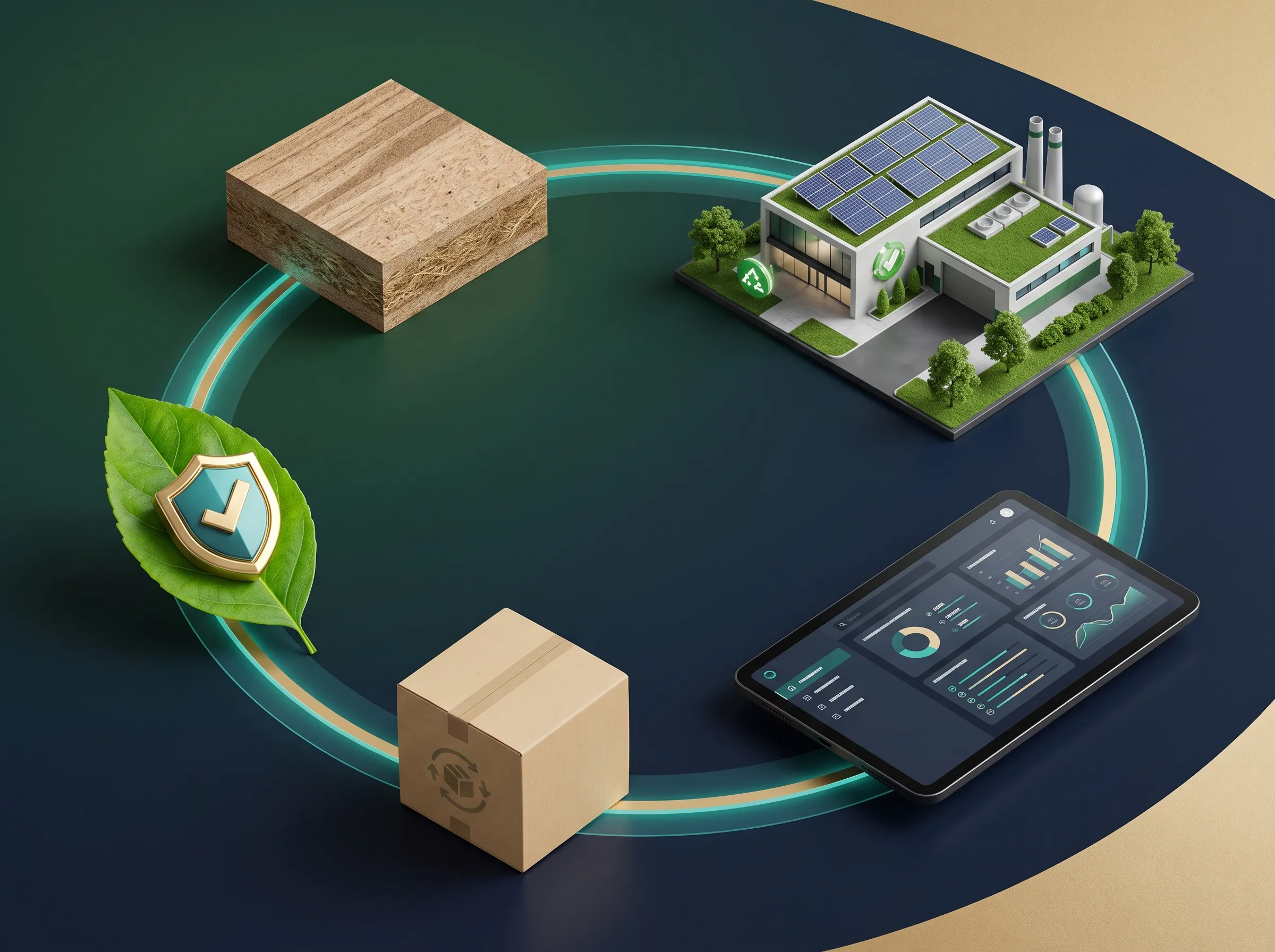
Sustainable procurement management is a methodology that integrates environmental, social, economic, and technical considerations into the processes of purchasing products, materials, and services, starting from identifying the need and preparing the specifications, to qualifying suppliers, evaluating bids, and monitoring performance after contracting.
Sustainable purchasing doesn't just mean buying the most expensive products or choosing materials that carry an environmental label, rather, it means making a purchase decision based on clear evidence that balances quality, cost, environmental impact, operational life, risks, and the supplier's ability to meet project requirements.
Standard offers ISO 20400 for Sustainable Procurement Guidelines to help organizations of all sizes and sectors integrate sustainability into their procurement policies, procedures and decisions.
Facilities, developers, and contractors can benefit from Sustainable procurement management service for major projects To develop standards for suppliers and materials and to include sustainability requirements in competition documents and contracts.
Why do large projects need sustainable procurement?
Large projects involve a large number of suppliers, contractors, materials, equipment, and logistics services. Choosing an unqualified supplier or low-quality material may lead to increased maintenance costs, delays in implementation, higher energy and water consumption, or the emergence of environmental and operational problems after the project has started.
Implementing sustainable procurement practices helps achieve the following benefits:
- Improving the quality of materials, products, and services purchased.
- Reducing environmental, operational and contractual risks associated with suppliers.
- Reduce operating, maintenance and replacement costs in the long term.
- Improving the efficiency of energy, water and raw material use.
- Reduce waste generated from short-life or irreparable products.
- Increase transparency and traceability within the supply chain.
- Supporting the project's emissions reduction and carbon footprint goals.
- Transforming sustainability goals into measurable contractual requirements.
- Increase the project's ability to monitor suppliers and evaluate their performance.
- Strengthening governance and reducing purchasing decisions based solely on price.
The difference between traditional and sustainable purchasing
| Comparison Aspect | Traditional purchases | Sustainable procurement |
|---|---|---|
| Basis of selection | Initial price and availability | Quality, total cost, impact, and risks |
| Supplier assessment | Supply capacity and price | Technical capability, environmental commitment, traceability, and risk management |
| Product Review | Basic technical specifications | Technical specifications, operational life, resource efficiency, and material source |
| the cost | Purchase cost | Purchase, operation, maintenance, replacement, and end-of-life costs |
| Risk management | This is often done after the problem has appeared. | Identifying risks prior to qualification, awarding, and contracting |
| monitoring | Delivery tracking only | Monitoring delivery, quality, sustainability, and supplier performance indicators |
Stages of implementing sustainable procurement in projects
1. Review the current procurement system
The process begins with a review of current policies and procedures, spending categories, supplier base, technical specifications, contracts, and evaluation and monitoring mechanisms.This step helps to identify gaps that may affect the quality of purchasing decisions.
2. Identifying priority procurement categories
Not all products and services require the same level of evaluation. Therefore, spending categories are classified according to their financial value, environmental impact, operational importance, availability of alternatives, and the level of risk associated with the supplier or material.
Priority categories in major projects may include:
- Building materials and finishes.
- Concrete, iron, aluminum, and glass.
- Electrical and mechanical devices and equipment.
- Cooling, lighting, and energy management systems.
- Water conservation and water treatment equipment.
- Insulation materials, paints, and chemicals.
- Packaging, transportation, and logistics services.
- Facilities management, maintenance and cleaning services.
- Protective equipment, clothing, and operational materials.
3. Developing sustainability standards
Clear and appropriate criteria are developed for each category. These criteria must be understandable, measurable, and verifiable, and directly linked to project objectives rather than using general statements that are difficult to prove.
4. Including requirements in tenders and contracts
Sustainability requirements are integrated into the scope of work, technical specifications, qualification models, evaluation criteria, contract terms, performance indicators, and reporting requirements. This step helps clarify the supplier's responsibilities from the outset.
5. Evaluating suppliers and offers
Offers are compared using a matrix that combines technical, financial, environmental, and risk assessments. The evaluation must be based on verifiable documentation and evidence, not general marketing claims.
6. Follow-up after award
Sustainable procurement management continues after the contract is signed by monitoring supplier performance indicators, product quality, compliance with specifications, required reports, and corrective actions when deviations occur.
Key criteria for evaluating suppliers in sustainable procurement
Supplier evaluation varies depending on the sector, contract size, and risk level; however, a comprehensive evaluation may include the following aspects:
Technical and operational capabilities
- Previous experience in supplying products or performing the required services.
- Production capacity, logistics, and commitment to delivery dates.
- Quality control, inspection and documentation systems.
- Support, maintenance, and spare parts teams are available.
Environmental performance
- Having a clear policy or system for environmental management.
- Managing energy, water, and material consumption.
- Waste, emissions and hazardous materials management.
- Having measurable goals and programs to improve performance.
- Provides documented environmental data for products when needed.
Supply chain transparency
- The ability to identify the source of materials and products.
- Documentation of sub-suppliers and production sites.
- Managing the risks of supply disruptions or reliance on a single source.
- There are procedures in place to verify requirements within the supply chain.
Contractual performance
- Quality of supplies and product rejection rate.
- Adherence to deadlines, quantities and specifications.
- Speed of processing feedback and corrective actions.
- Commitment to submitting the required reports and documents.
How is the sustainability of materials and products assessed?
The assessment of a material's sustainability is not based on a single characteristic, such as its recyclability. A material may be recyclable, but consume high amounts of energy, be difficult to maintain, or require frequent replacement.
Therefore, the evaluation of materials and products can include the following:
- The source of the raw material and its traceability.
- Recycled or renewable content within the product.
- Energy and water consumption during manufacturing and use.
- Emissions related to production and transportation.
- Product durability and expected operational lifespan.
- Maintenance, repair and spare parts needs.
- The presence of hazardous materials or compounds that may affect the environment and health.
- Packaging size and the possibility of reuse or recycling.
- Transportation distance, shipping method and storage.
- Options include restoration, reuse, or recycling after the end of its lifespan.
- Provide reliable environmental disclosures or documentation for the product.
The appropriate criteria must be chosen according to the function of the material, its place of use, and the requirements of the project, because priorities differ between building materials, industrial equipment, electrical appliances, chemicals, and operational services.
What role does lifecycle costing play in purchasing decisions?
The cheapest product to buy may be the most expensive in the long run. It may consume more energy or water, require more frequent maintenance, have a shorter lifespan, or be difficult to repair and replace.
Lifecycle cost analysis helps compare alternatives by calculating elements such as:
- Cost of purchase, supply and installation.
- Cost of energy, water, and operating materials consumption.
- The cost of inspection, preventive and corrective maintenance.
- Cost of spare parts and repairs.
- Cost of downtime or reduced operating efficiency.
- Replacement cost over the project's lifetime.
- The cost of transportation, processing, or disposal at the end of its life.
- Any remaining value or possibility of reuse or recovery.
This analysis allows management to see the true cost of the product or asset, and to make a more accurate decision instead of comparing purchase prices alone.
Supplier and supply chain risk management
Supply chain risks are a key part of sustainable procurement, especially in projects that rely on imported materials, multiple suppliers, or tight execution schedules.
Risks that should be assessed include:
- The supplier's inability to provide the quantities on time.
- Relying on a single factory or source for basic materials.
- Inconsistent product quality between supply batches.
- Difficulty in tracing the source of materials or sub-suppliers.
- Increased environmental impact of manufacturing or transportation operations.
- Lack of spare parts or maintenance services locally.
- Changes in prices or shipping and storage costs.
- The product does not comply with the specifications or contractual requirements.
- Relying on undocumented environmental claims.
- The supplier was slow to address non-conformities.
Early risk assessment helps to establish appropriate contractual terms, identify required documentation, prepare alternative supply plans, and develop monitoring indicators that correspond to the importance of each supplier.
Which sectors benefit from sustainable procurement?
Sustainable procurement management can be applied across various sectors, whether at the level of a single project or at the level of the entire procurement system within an organization.
- Government projects and public facilities.
- Infrastructure, transportation and road projects.
- Real estate projects, cities, and residential complexes.
- Factories and industrial facilities.
- Energy and renewable energy projects.
- Ports, maritime and logistics services.
- Water and wastewater treatment projects.
- Hospitals and healthcare facilities.
- Universities and educational institutions.
- Hotels, shopping centers, and major facilities.
- Contracting and project management companies.
- Entities seeking to improve sustainability performance and supply chains.
Indicators for measuring the performance of sustainable procurement
Organizations need clear performance indicators to measure the success of their sustainable procurement practices. These indicators should be selected based on the nature of the procurement, available data, and project objectives.
Examples of performance indicators include:
- The percentage of spending that has been subject to approved sustainability standards.
- Percentage of suppliers whose environmental performance has been assessed.
- Percentage of suppliers whose environmental performance has been assessed.
- Percentage of suppliers whose environmental performance has been assessed.
- The amount of energy or water consumption reduced by choosing better alternatives.
- Percentage of products that can be repaired, reused, or recycled.
- The rate of suppliers' adherence to delivery dates and specifications.
- Number of non-conformities and corrective actions.
- The savings resulting from lifecycle cost analysis.
- The proportion of local suppliers or locally available materials when appropriate for the project.
Common mistakes when implementing sustainable purchasing
Relying on the initial price only
Ignoring operating, maintenance, and replacement costs may result in choosing a low-priced product that is costly over the life of the project.
Using general and non-measurable terms
Phrases such as "environmentally friendly product" are not enough without specifying the evidence, standards, and documents that prove this claim.
Adding requirements after contracting
The application of sustainability standards is most effective when they are included in the planning, qualification, and competition phase, and not after the supplier has been selected.
Use the same standards for all purchases
The risks and impacts vary between materials, equipment, and services; therefore, standards and weights must be allocated to each category.
Failure to follow up with the supplier after awarding the contract
A preliminary assessment does not guarantee continued commitment. The supplier must be monitored according to clear indicators throughout the contract period.
Relying on certificates alone
Certificates may be useful within the verification process, but they do not replace the evaluation of product quality, supplier performance, and ability to meet project requirements.
How does Environmental Dimension Company help you with sustainable procurement management?
Environmental Dimension Company provides technical support for the development and implementation of sustainable procurement in a manner that is appropriate to the nature of the project, the sector, spending categories, and level of risk.
The scope of work may include:
- Review current procurement policies and procedures.
- Identifying sustainability gaps within the procurement cycle.
- Classify spending categories according to impact, risk, and priority.
- Classify spending categories according to impact, risk, and priority.
- Developing prequalification models for suppliers.
- Preparing supplier and bid evaluation matrices.
- Developing environmental, social and technical standards for materials and products.
- Incorporating sustainability requirements into specifications, tenders, and contracts.
- Conduct a comparison between alternatives using lifecycle costing.
- Setting up performance indicators and scorecards to monitor suppliers.
- Developing verification, reporting, and corrective action mechanisms.
- Providing practical recommendations to improve performance and reduce risks.
Learn more Sustainable procurement management service for major projects Request an initial assessment of your project's needs.
Frequently asked questions about sustainable purchasing
What is meant by sustainable purchasing?
It is the integration of environmental, social, economic and technical criteria into the procurement processes and the selection of suppliers and materials, taking into account cost, risk and impact throughout the life cycle.
Are sustainable purchases more expensive than traditional purchases?
Not necessarily. Some alternatives may have a higher purchase price, but they achieve a lower overall cost due to reduced energy and water consumption, as well as lower maintenance and replacement costs.
What is the difference between purchase price and life cycle cost?
The purchase price is the amount paid to acquire the product, while the life cycle cost includes purchase, operation, maintenance, energy, water, repair, replacement, and end-of-life.
How is a sustainable resource assessed?
The supplier is evaluated based on its technical capabilities, product quality, environmental performance, supply chain transparency, contractual compliance, risk management, and available documentation and evidence.
Can sustainable procurement be applied to an existing project?
Yes, existing contracts, suppliers, and procurement categories can be reviewed, and follow-up and improvement standards can be applied to new procurements, renewal, operation, and maintenance processes.
When should sustainability standards be included?
It is preferable to include them from the stage of identifying the need, preparing specifications, qualification and competition, so that the requirements are clear to suppliers and can be evaluated, contracted and followed up on.
Is ISO 20400 a certification standard for organizations?
ISO 20400 is a guidance standard that helps organizations integrate sustainability into their procurement policies and processes, and is not a standard intended for granting certification to an organization.
What are the outputs of a sustainable procurement management service?
The outputs may include a sustainable procurement policy and procedures, a spending priority matrix, supplier evaluation models, material standards, lifecycle cost analysis, scorecards, and follow-up reports.
The content was reviewed by a team of environmental experts.
Environmental content at Al-Ba’ad Al-Bia’i Environmental Consulting Company is prepared and reviewed by a team of specialists in environmental studies, environmental impact assessment, environmental compliance, and environmental monitoring.
Meet the expert team