
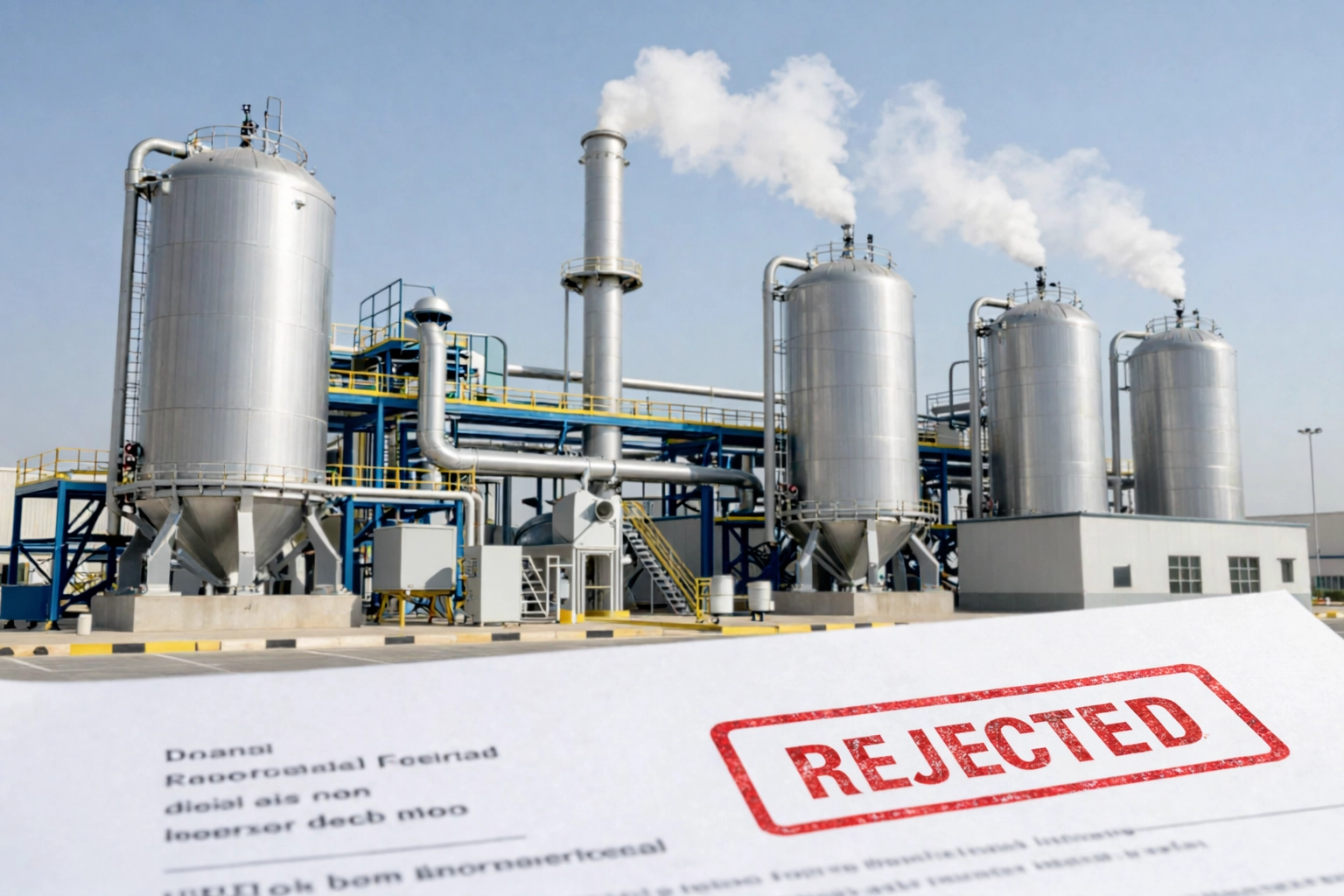

Obtaining an environmental permit is no longer a formal or routine procedure to be taken lightly; it has become a sensitive regulatory step upon which a project's continuity, future expansions, and relationship with regulatory bodies are built. However, many facility owners still face real challenges due to reasons for environmental permit rejection, which may relate to a lack of data, incomplete documents, or technical and record-keeping observations that affect the evaluation of the application. The problem is that some think that a rejection of an environmental permit means the end of the road, while the reality is quite different; in most cases, the rejection serves as a clear warning of compliance gaps or deficiencies in the submitted file. In this article, we review in detail the reasons for environmental permit rejection through 15 common causes, distributed among application errors, technical errors, and errors in records and measurements, while clarifying the logic of environmental assessment and how to address observations quickly and professionally, which helps you increase the chances of acceptance the first time or upon resubmission without delay or additional losses.
Table of Contents
- Why is an environmental permit rejected? Understanding the logic of assessment and compliance
- Application errors: missing data, incorrect attachments, non-matching activity
- Technical errors: site layout, emission sources, water and waste management
- Errors in records and measurements: old/uncertified reports/illogical numbers
- Post-rejection correction plan: How to address observations and resubmit quickly
Why is an environmental permit rejected? Understanding the logic of assessment and compliance
To understand the reasons for environmental permit rejection, one must first grasp the methodology adopted by environmental authorities when evaluating any application. The competent authority is not only looking for complete documents but is seeking to answer three main questions:
- Is the submitted activity clear and consistent with reality?
- Is the environmental impact of the activity assessed and controlled?
- Is the facility capable of continuous compliance with the requirements?
Any flaw in answering one of these questions raises the level of environmental risk, thus increasing the likelihood of rejection.
Environmental assessment logic in brief
- Protecting the environment and public health.
- Reducing pollution and emissions.
- Ensuring proper waste management.
- Ensuring operational readiness, not just promises.
The permitting authority does not rely on intentions, but rather on evidence, data, and the actual capacity for compliance.
Are you facing rejection or delays in your environmental permit? Contact us now! Get a quick review of your file to understand the reasons for rejection and how to properly address the feedback.
Application errors: missing data, incorrect attachments, non-matching activity
A large number of reasons for environmental permit rejection stem from administrative errors in the application itself, rather than complex environmental issues.
Reason 1: General or inaccurate data about the facility
One of the most common mistakes:
- Entering a generic activity name that does not reflect reality.
- A brief and vague description of operations.
- Failure to mention raw materials or by-products.
How to avoid this?
Write an accurate and detailed description of the activity, including all operational processes and steps.
Reason 2: Mismatch between the activity and the commercial registration or license
If the environmental activity submitted does not match:
- Commercial registration.
- The municipal license.
- The industrial license.
Then the application is often rejected automatically.
The solution:
Ensure the activity name is standardized across all authorities before submitting.
Reason 3: Incorrect or incomplete attachments
Such as:
- Uploading the wrong file.
- Expired document.
- Unclear diagram.
This is one of the most prominent, yet easily avoidable, reasons for environmental permit rejection.
Reason 4: Using outdated or unapproved templates
Some facilities rely on:
- Old templates.
- Copied reports.
- Outdated files.
The environmental authority verifies the date and validity of the documents.
Reason 5: Ignoring previous feedback in a new application
In the event of a previously rejected or returned application:
- Failure to address previous feedback.
- Resubmitting the same files.
Leads to repeated rejection.
Technical errors: site layout, emission sources, water and waste management
Technical errors are considered among the most dangerous reasons for rejection Environmental Permit Because they directly relate to environmental impact.
Reason 6: Inaccurate or unapproved site plan
This includes:
- Failure to clarify wind directions.
- Absence of emission sources.
- Failure to designate storage areas.
The site plan is a pivotal document in environmental assessment.
Reason 7: Failure to clearly identify emission sources
Such as:
- Chimneys.
- Vents.
- Thermal processes.
Or underestimating their impact without supporting data.
Reason 8: Weak emission control system
Even if emission sources are mentioned:
- Lack of filters.
- Or the presence of inadequate systems.
Reason 9: Unclear water and sewage management
Common mistakes:
- Failure to identify the water source.
- Absence of a treatment system.
- Mixing industrial waste with sewage.
Reason 10: Poor waste management
Such as:
- Failure to classify waste.
- Unsafe storage.
- Absence of transportation and disposal contracts.
Waste management is a sensitive component in any environmental assessment.
Record and Measurement Errors: Outdated / Non-accredited reports / Illogical figures
Records serve as practical evidence of compliance, and any discrepancies within them are among the recurring reasons for environmental permit rejection.
Reason 11: Outdated measurement reports
Relying on:
- Reports older than one year.
- Measurements that do not reflect the current situation.
Leads to rejection.
Reason 12: Non-accredited laboratories
Environmental authorities do not accept:
- Analyses from non-accredited entities.
- Reports without official stamps.
Reason 13: Illogical or inconsistent figures
Such as:
- Zero emissions for an industrial activity.
- Unrealistic water consumption.
These are among the reasons for environmental permit rejection that immediately raise suspicions.
Reason 14: Absence of operational records
Such as:
- Maintenance logs.
- Waste logs.
- Training logs.
Even new facilities are required to demonstrate readiness.
Reason 15: Lack of an environmental emergency plan
Absence of a plan to deal with:
- Leaks.
- Fires.
- Chemical spills.
It is considered a high-risk indicator.
Post-rejection correction plan: How to address observations and resubmit quickly
Permit rejection is not the end of the road. Handling the rejection correctly significantly reduces the time to re-acceptance.
Step one: Read the notes thoroughly
Do not just settle for the title; understand:
- The reason for the note.
- Its regulatory background.
- The level of risk.
Step two: Categorize the notes
- Administrative.
- Technical.
- Operational.
This helps in prioritizing.
Step three: Root cause treatment, not cosmetic fixes
Common mistakes include:
- Modifying a document only.
- without any actual improvement on the ground.
Step 4: Documenting the Rectification
Any corrective action must be:
- Documented.
- Supported by photos or reports.
- Verifiable.
Step 5: Resubmitting with Confidence
After radically addressing the reasons for environmental permit rejection, the chances of acceptance are significantly higher.
Frequently Asked Questions
Can the reason for an environmental permit rejection be known in detail?
Yes, feedback is clarified through the submission platform and is often detailed and actionable.
Which document most frequently causes a request to be rejected?
The site plan and unapproved environmental reports are the most common causes of rejection.
After a rejection, should I resubmit or edit the same request?
Usually, you edit the same request unless it has expired or you are instructed to resubmit.
How can I avoid rejection if the facility is already established and operating?
By conducting a preliminary environmental review to identify gaps before submitting.
Why do facilities turn to specialized consulting firms?
Given the complexity of requirements and the multiple reasons for environmental permit rejection, relying on a specialized entity has become a smart choice, not an additional cost.
This is where Albuad Environmental Company Al-Bee'i (Albuad Environmental Company) company plays its role, providing comprehensive support including:
- Reviewing the application before submission
- Pre-identifying potential reasons for rejection
- Preparing and auditing documents
- Addressing feedback after rejection
- Accelerating acceptance from the first attempt
Finally, an environmental permit rejection does not mean the project has failed, but it is a clear indicator of gaps that can be addressed with awareness and expertise. Therefore, understanding the reasons for environmental permit rejection gives you negotiating power, saves time, reduces losses, and puts your facility on a path to sustainable compliance.
If you are facing repeated rejections, wish to submit for the first time with confidence, or want to review your application before submitting it.
Contact Albuad Environmental Company Get professional support that transforms environmental complexity into a clear and smooth process, giving your facility the opportunity to be accepted from the first attempt.
The content was reviewed by a team of environmental experts.
Environmental content at Albuad Environmental Company is prepared and reviewed by a team of specialists in environmental studies, environmental impact assessment, environmental compliance, and environmental monitoring.
Meet the expert team

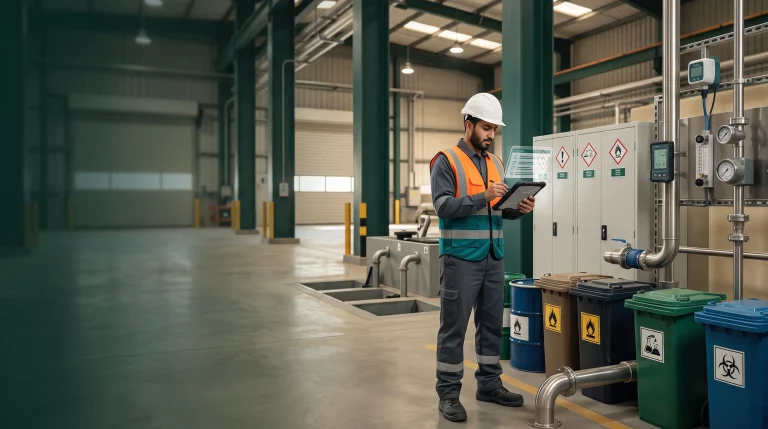
[…] راجع دليل أسباب رفض التصريح البيئي وكيفية تجنبها، مع التمييز بين الرفض وطلب استكمال […]