 966535733690 +


The Importance of Environmental Research in Assessing the Environmental Impacts of Projects

The environment is the foundation of life on Earth, and ecological balance is what ensures the continuity of life for future generations. With the increasing growth of human activities—such as industries and development projects—it has become essential to assess the environmental impacts of these projects to ensure that fragile ecosystems are not destroyed. This is where environmental research becomes crucial in impact assessment, serving as a key tool to understand potential environmental challenges and provide effective solutions to mitigate them. But what does environmental research mean, and how does it affect the way environmental impacts are assessed? In this article, we will discuss how environmental research contributes to improving environmental assessment methods for different projects through systematic scientific data collection and analysis. We will also highlight the most important techniques and tools that support this process.
Table of Contents:
- What role does environmental research play in improving the quality of impact assessment?
- Research data sources: baseline conditions and field studies
- How does environmental research reduce uncertainty and improve impact prediction?
- Integrating research with risk modeling and alternative scenarios
- The impact of research on designing mitigation and monitoring measures
- Practical examples: biodiversity, air quality, water, and noise
What role does environmental research play in improving the quality of impact assessment?
Environmental research is considered the backbone of the Environmental Impact Assessment (EIA) process for any project. When a team of scientists and experts begins studying a project’s effects on the environment, they rely on environmental research to collect data and provide an accurate evaluation of potential risks. This helps identify negative impacts before they escalate and ensures that appropriate preventive measures are implemented.
Environmental research improves the quality of assessment through:
- Collecting accurate and reliable data:The process begins by establishing environmental baselines—i.e., the current environmental condition before the project starts. This information is essential for determining the extent of changes that may occur as a result of project implementation.
- Using modern analytical tools:Through advanced environmental modeling, environmental research can provide precise estimates of the project’s potential future impacts.
- Identifying less obvious impacts:Environmental research helps detect impacts that may not be visible at first, such as effects on biodiversity or on air and water quality.
Get started now: Send the project details on WhatsApp and we’ll review them immediately.
Research data sources: baseline conditions and field studies
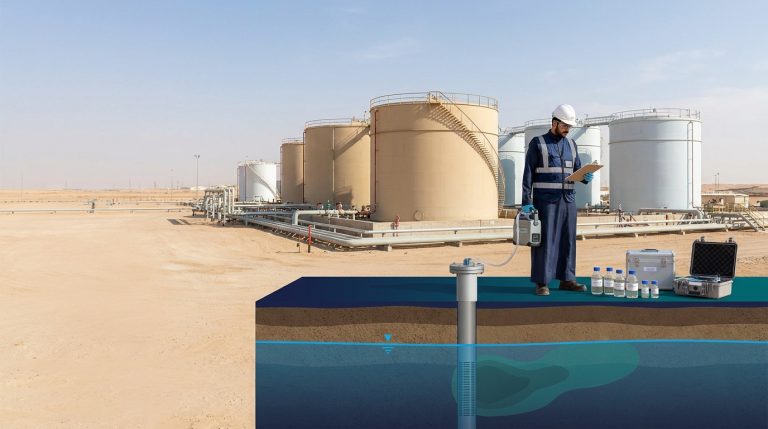
Research data is the primary source for understanding the potential environmental impacts of projects. This data is collected through field studies and baseline assessments, which serve as the reference point against which environmental impacts are measured after the project is implemented. These studies include measuring soil, air, and water quality, as well as other natural resources in the area affected by the project.
Baselines provide a clear picture of the environmental conditions before the project begins, making it easier to compare impacts after implementation. Without this initial data, it becomes difficult to accurately determine the extent of the project’s effect on the environment.
How does environmental research reduce uncertainty and improve impact prediction?
It is well known that major projects may cause unexpected environmental impacts. This is where environmental research plays a key role in reducing uncertainty, as it provides precise scientific information that helps narrow knowledge gaps about how a project may affect the environment.
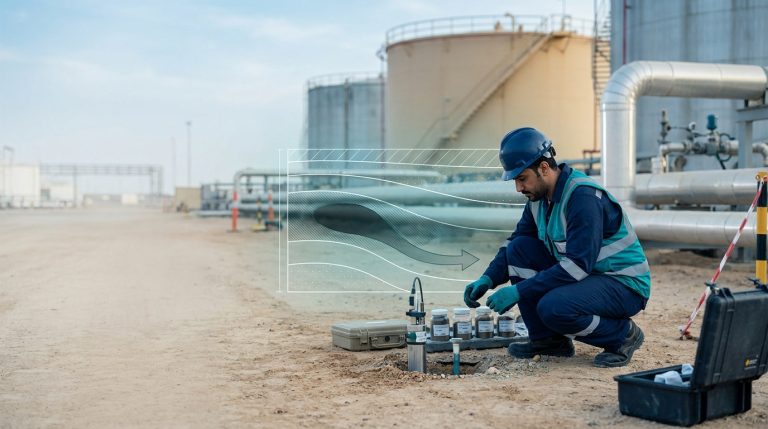
- Collecting comprehensive field dataThrough field surveys, environmental research can reveal environmental changes that may result from human activities, which improves the ability to predict these impacts more accurately.
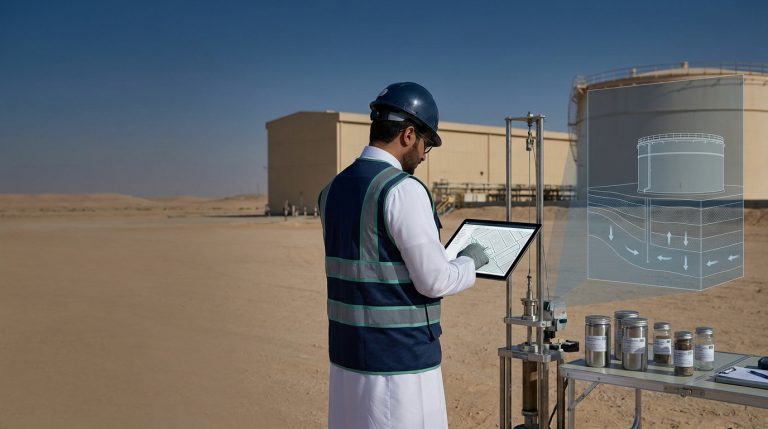
- Applying environmental modelingBy analyzing data using mathematical models, it becomes possible to predict how environmental impacts may develop over time, reducing risks and making the assessment process more realistic.
Integrating research with risk modeling and alternative scenarios
Risk modeling is one of the effective tools in environmental research, as it helps explain how environmental factors interact with human activities. However, modeling does not stop at analyzing the current situation—it also extends to forecasting future scenarios based on research data.
Integrating environmental research with risk modeling enables experts to present multiple alternative scenarios, which may include:
- Future analysis of the project’s long-term impacts.
- Proposing preventive solutions if negative impacts are expected.
- Reducing potential harm by assessing development alternatives.
The impact of research on designing mitigation and monitoring measures
By collecting accurate data on the potential environmental impacts of projects, environmental research helps design effective mitigation measures. These measures are an essential part of the Environmental Management Plan, where strategies are developed to limit negative impacts.
Such measures include:
- New techniques to reduce pollution.
- Measures to improve efficiency in using natural resources.
- Sustainable project planning aligned with biodiversity conservation.
These strategies help ensure that the project is implemented in a way that does not harm the environment—and can even contribute to improving it.
Practical examples: biodiversity, air quality, water, and noise
Biodiversity, air quality, water resources, and noise are among the key environmental components that environmental research considers when assessing the environmental impacts of projects..
For example:
- BiodiversityEnvironmental research can identify potential impacts on plant and animal species in the project’s surrounding area.
- Air Quality:It helps measure air pollution levels before and after project implementation.
- Water:Research is used to examine the project’s impact on local water resources.
- Noise:Through accurate measurements, research can determine negative impacts on environmental noise levels in the surrounding area.
Frequently Asked Questions
Can a strong impact assessment be done without a baseline study?
No. Without an environmental baseline study, it becomes difficult to determine the scale of potential project impacts, and comparisons between the current situation and post-implementation conditions will be inaccurate.
What is the difference between a research study and an executive environmental report?
A research study is an in-depth analysis that considers all environmental factors and uses scientific tools and models to predict impacts. An executive report is a summary of the findings and recommendations used during decision-making stages.
When do we need environmental modeling within a study?
Environmental modeling is necessary when there is a need to forecast future environmental impacts and analyze alternative scenarios for a specific project.
How are research results used in an Environmental Management Plan?
Environmental research results are used to design mitigation and monitoring measures, and to determine the best methods for environmental protection and reducing the negative impacts of projects.
The importance of environmental research in impact assessment cannot be overlooked in any development project—whether industrial, urban, or agricultural. By collecting and analyzing accurate data, environmental research helps reduce environmental risks, improve project sustainability, and protect the environment for future generations.
If you are looking for specialized environmental consulting or would like to conduct an Environmental Impact Assessment for your project, feel free to contact Al Buad Environmental. We provide innovative scientific solutions aligned with international environmental standards.
The content was reviewed by a team of environmental experts.
Environmental content at Al-Ba’ad Al-Bia’i Environmental Consulting Company is prepared and reviewed by a team of specialists in environmental studies, environmental impact assessment, environmental compliance, and environmental monitoring.
Meet the expert team