 966535733690 +


Environmental Impact Assessment (EIA) Studies in Saudi Arabia: Methodology and Deliverables

Large-scale development projects in the Kingdom of Saudi Arabia face a central challenge: achieving a balance between economic growth and environmental preservation. In this context, Environmental Impact Assessment (EIA) studies emerge as a mandatory and critical tool to ensure the sustainability of these projects. These studies are not merely a regulatory requirement but rather an analytical roadmap that identifies potential environmental risks and provides scientific solutions to avoid or mitigate them before any work begins. The methodology adopted in Saudi Arabia for conducting EIAs is characterized by its strictness and requires deep expertise in local regulations and international standards to ensure the quality of deliverables, ultimately leading to obtaining the necessary approvals.
What is Environmental Impact Assessment and Why is it Important?
Environmental Impact Assessment (EIA) studies are a comprehensive analytical process aimed at identifying, predicting, and evaluating the potential impacts that any proposed project may have on its surrounding environment before a decision is made to proceed.
This assessment is not a procedural formality; it is the first line of defense to ensure your project’s sustainability and compliance with Saudi regulations.
The importance of these studies lies in their ability to provide a clear understanding of environmental risks, allowing the development of effective preventive measures and avoiding costly fines or delays that may result from non-compliance.
Relying on a strong EIA report reduces risks and protects your company’s reputation and investment in the long term.
Get a free consultation on the EIA methodology and deliverables – Click for WhatsApp.
Project Classification and Requirements for Each Category
Regulatory authorities in Saudi Arabia—such as the National Center for Environmental Compliance (NCEC)—follow a clear methodology for classifying projects based on their size, nature, and expected environmental impact.
Understanding this classification is essential for determining the type of Environmental Impact Assessment required, which generally falls into two main categories that define the depth of analysis:
- Initial Environmental Screening (IES): For projects with low or minimal environmental impact.
- Detailed Environmental Impact Assessment (DEIA): For large, complex projects with significant or sensitive environmental effects.
Identifying the category your project falls under at an early stage saves time and effort and ensures that your application for the environmental permit is submitted in accordance with precise and specific requirements.
Study Methodology: Baseline, Measurements, and Surveys
The foundation of any successful Environmental Impact Assessment is establishing the environmental baseline—the current state of the environment at the project site before any activities begin.
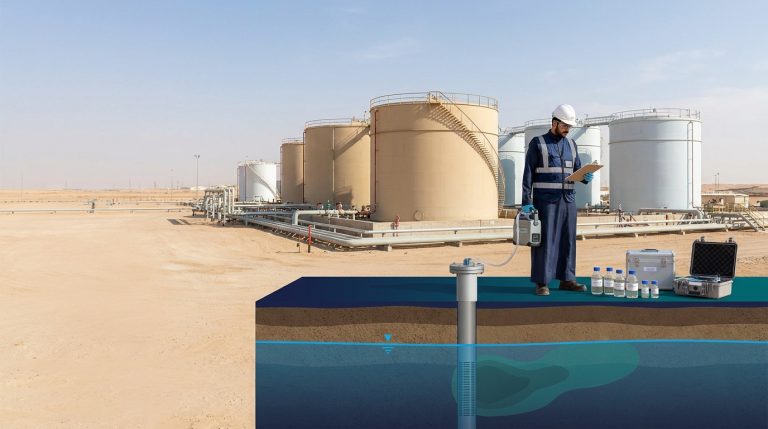
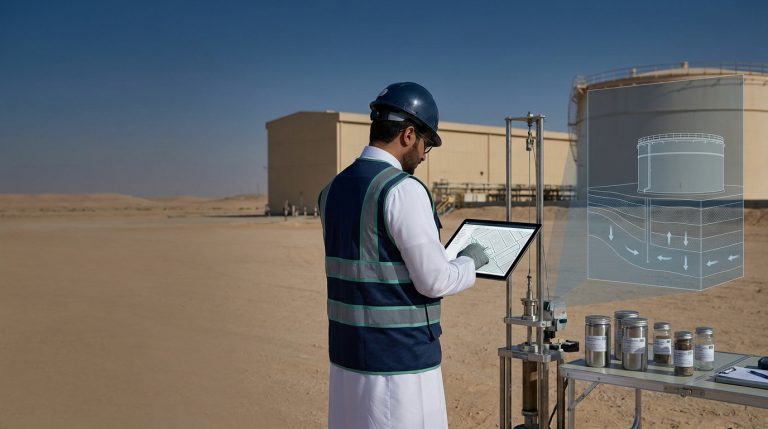
The EIA methodology requires collecting precise and comprehensive field data using advanced measurement tools and survey techniques. These measurements typically include assessing air, water, and soil quality; documenting biodiversity (plants and animals); and conducting noise analysis.
This intensive and scientifically documented stage enables the environmental consulting to accurately understand the existing environmental conditions and reliably predict the changes your project activities may cause—ensuring the findings are credible and defensible before regulatory authorities.
Project Alternatives and Risk Analysis
One of the golden principles of Environmental Impact Assessment is evaluating the available alternatives to a project. The process is not limited to assessing the proposed option (your project); it must also include analyzing alternative scenarios, such as the “no-project” option, alternative locations, technologies, or design variations.
This systematic analysis demonstrates to licensing authorities that you have selected the option with the least environmental impact among the feasible choices. In parallel, a detailed analysis of potential environmental risks is conducted by identifying their likelihood, consequences, and severity—laying the foundation for a proactive plan to address any possible contingencies.
Mitigation and Environmental Management Plan (EMP)
The Environmental Management Plan (EMP) is the most practical and valuable component of any Environmental Impact Assessment study.
This plan is not a set of promises; it is an actionable document that outlines the specific measures and procedures required to minimize or eliminate the project’s anticipated negative impacts.
The plan includes timelines, clearly defined responsibilities, performance indicators, and monitoring programs to ensure effective implementation throughout the construction and operation phases. Submitting a strong, well-designed EMP is a decisive factor in obtaining the environmental permit quickly and efficiently.
Study Deliverables and Accreditation Requirements
The final output of an EIA study is a comprehensive and fully documented report submitted as an essential requirement for securing the environmental permit. These deliverables must strictly comply with the technical and linguistic specifications required by the regulatory authorities in the Kingdom. The main deliverables include:
- Initial Screening Report or Detailed EIA Report: Includes the methodology, baseline conditions, impact predictions, and alternatives analysis.
- Environmental Management Plan (EMP): Outlines preventive and corrective measures along with monitoring programs.
- Executive Summary: Provides non-specialist readers with a clear overview of the study and its key findings.
Meeting all formatting, quality, and content requirements is crucial to ensuring that the study is approved by the National Center for Environmental Compliance (NCEC) or other relevant authorities without delays.
Requirements for Obtaining a Saudi Environmental Permit
إن الحصول على الترخيص البيئي السعودي Securing an environmental permit for your project in Saudi Arabia is a mandatory and critical step to ensure legal compliance and avoid penalties or unexpected project interruptions.
The primary requirement begins with submitting Environmental Impact Assessment (EIA) studies prepared by a qualified and NCEC-approved consulting entity.
These requirements also include adhering to environmental standards and regulations specific to your activity and sector—whether industrial, real estate, or tourism—along with providing all engineering drawings, site details, and information on resources used. Ensuring the accuracy and quality of the submitted report significantly accelerates the review and approval process.
Key Required Submission Documents
To ensure your project is ready for the approval process, you must compile a complete package of official documents that support your application for the Saudi environmental permit. The commonly required documents include:
- Official permit application: Submitted electronically through approved platforms (such as the “Ezad” platform).
- Environmental Impact Assessment (EIA) study: The core document that evaluates environmental impacts and identifies solutions.
- Detailed engineering plans: Site maps, wastewater system layouts, and waste management designs.
- Commercial registration and land ownership documents: To verify applicant eligibility and confirm the validity of the project site.
The accuracy of these documents and their adherence to approved templates is essential to avoid repeated requests for missing information, which could delay your project.
Standard Methodological Steps for Preparing Environmental Impact Assessment (EIA) Reports
Regulatory authorities in the Kingdom adopt a structured methodology to ensure the quality and reliability of EIA reports. This methodology begins with the Scoping process, during which the most significant environmental issues that must be addressed in the study are identified and agreed upon.
This is followed by the data collection phase, which includes field surveys and measurements of the environmental baseline. The collected data is then analyzed to predict and assess the type and magnitude of potential impacts associated with each project activity.
These sequential scientific steps ensure that your EIA study meets all official requirements and is built upon strong scientific foundations that cannot be contested.
-
Impact Prediction and Mitigation Planning
Once the environmental baseline is established, the next step is impact prediction, where specialized models are used to anticipate the changes your project activities may cause in the surrounding environment.
Based on these predictions, the Environmental Management Plan (EMP) is developed—an operational document that outlines the preventive and corrective measures required to reduce negative impacts to acceptable levels.
This practical plan, which forms a crucial part of the EIA study, demonstrates to licensing authorities your genuine commitment to achieving environmental compliance throughout the entire lifecycle of the project.
The Benefits of Investing in High-Quality Environmental Impact Assessment Studies
Viewing Environmental Impact Assessment (EIA) studies as a cost is a limited perspective. Investing in high-quality reports is, in fact, an investment in the future of your project. Excellent reports give you a competitive advantage by accelerating the process of obtaining the Saudi environmental permit and preventing delays in the construction timeline.
They also significantly reduce the risk of fines or sudden operational shutdowns due to non-compliance, saving substantial costs in the long term.
- Faster Approvals: Accurate and well-documented reports minimize inquiries and lengthy reviews.
- Reduced Legal Risks: Ensures full compliance with local and international environmental laws.
- Enhanced Reputation: Demonstrates your company’s commitment to sustainability and social responsibility.
-
The Economic Value of Environmental Compliance
Achieving environmental compliance through EIA studies is not solely a regulatory requirement; it also delivers direct economic value.
Proactive environmental planning enables you to identify opportunities to optimize resource consumption—such as water and energy—and to adopt more efficient, environmentally friendly technologies.
This shift toward sustainability reduces long-term operational costs and opens doors to green financing and preferential incentives offered by organizations that support sustainable projects. In this way, the quality of EIA reports becomes a true investment return.
In conclusion, Environmental Impact Assessment (EIA) studies are far more than a routine procedure; they are a foundational pillar for the success of any development project in the Kingdom of Saudi Arabia. Adhering to a rigorous study methodology—from establishing the environmental baseline to preparing the Environmental Management Plan (EMP)—ensures a smooth and effective process for obtaining the Saudi environmental permit. Investing in high-quality EIA reports protects you from legal and financial risks and strengthens your reputation as a company committed to sustainability and Vision 2030. Your project deserves a partner with deep expertise in local regulations to guide you confidently toward full environmental compliance. At Al-Buad Al-Bee’i, we prepare your project for the future—where environmental efficiency meets economic success. Secure your project’s future today and contact us to begin a customized Environmental Impact Assessment study tailored to your needs.
Looking for a reliable partner with the expertise to guide your project confidently toward environmental compliance? Let Al-Buad Environmental handle the complexities of the EIA process for you, ensuring your project progresses smoothly and in full alignment with national and international standards.
Avoid errors and delays in EIA reports – Message us now on WhatsApp.
Frequently Asked Questions
1. How can I determine the environmental classification of my project according to the requirements of the National Center for Environmental Compliance (NCEC)?
Your project classification (Initial or Detailed) is determined based on the type of activity, its scale, geographic location, and the sensitivity of the surrounding environment, according to the official NCEC screening lists. To determine the classification accurately, you must review these lists or consult an accredited environmental consultancy to conduct the Initial Environmental Screening (IES), which identifies whether you need an Initial Environmental Impact Assessment (EIA) or a Detailed Environmental Impact Assessment (DEIA).
2. What field measurements and surveys are required in the Environmental Impact Assessment methodology in Saudi Arabia?
These measurements aim to establish the environmental baseline of the site. The essential field surveys include:
- Air Quality: Measuring major air pollutants such as NOx, SO₂, and PM10.
- Noise: Monitoring ambient noise levels.
- Water Quality: Analyzing surface and groundwater samples.
- Soil: Testing soil characteristics and identifying any contamination.
- Biological Survey: Documenting and classifying biodiversity (plants and animals) within the impact area.
3. What is the difference between the Initial Environmental Screening (IES) and the Detailed Environmental Impact Assessment (DEIA)?
The main difference lies in the depth of the study and the level of impact expected:
|
Assessment Type |
Brief Description |
When Is It Required? |
|
Initial (IES) |
A simplified assessment focused on quickly identifying potential impacts. |
For projects with low or moderate environmental impact. |
|
Detailed (DEIA) |
A comprehensive study that includes precise impact predictions and extensive field measurements. |
For projects with high environmental impact or those located in environmentally sensitive areas. |
4. What is the importance of the Environmental Mitigation and Management Plan (EMP)?
The Environmental Management Plan (EMP) is the operational document that translates the findings of the Environmental Impact Assessment into actionable measures. Its importance lies in the following:
- Compliance: Ensures that the project adheres to Saudi environmental requirements throughout construction and operation.
- Prevention: Identifies concrete measures to avoid or minimize anticipated negative impacts.
- Monitoring: Establishes clear mechanisms for continuously monitoring the project’s environmental performance.
- Prerequisite: It is an essential requirement for obtaining the final environmental permit from the NCEC.
5. Provide a simplified model of an Environmental Mitigation and Management Plan (EMP) for an industrial project in Saudi Arabia.
A simplified sample for one EMP element:
|
Expected Impact |
Proposed Mitigation Measures |
Responsible Entity |
Implementation Period |
|
Increase in dust and vapor emissions (during construction and operation) |
Install advanced filtration systems (such as scrubbers or bag filters); cover construction materials during transport; apply water spraying in excavation areas. |
Construction Manager / Plant Manager |
Continuous (daily) |
Send your project details to receive a customized EIA study plan – Direct WhatsApp.
The content was reviewed by a team of environmental experts.
Environmental content at Al-Ba’ad Al-Bia’i Environmental Consulting Company is prepared and reviewed by a team of specialists in environmental studies, environmental impact assessment, environmental compliance, and environmental monitoring.
Meet the expert team