 966535733690 +


Air and Soil Quality Monitoring: Measurement Methodologies and Reporting for Industrial Facilities

Did you know that even a minor lapse in monitoring air quality at industrial facilities can cost your operation heavy fines, operational shutdowns, or the loss of regulatory trust?
In an industrial landscape governed by stringent environmental regulations, emissions measurement, the development of precise sampling plans, and the preparation of compliance reports have become fundamental pillars of both sustainability and profitability. In this guide, we will walk you through approved methodologies and best practices, alongside practical solutions offered by Al-Buad Environmental Company to support your compliance with confidence and professionalism. Stay with us.
Table of Contents:
- Monitoring scope and reference standards
- Measurement and calibration methodologies
- Sampling plans (time / location / frequency)
- Emission limits and corrective actions
- Report preparation and submission to relevant authorities
- Monitoring tools and equipment and maintenance requirements
Monitoring Scope and Environmental Reference Standards
To understand the importance of air quality monitoring for industrial facilities, it is essential first to define the monitoring scope and the reference standards governing measurement and environmental compliance. This ensures the protection of the environment, as well as the health of workers and the surrounding community.
What does air quality monitoring for industrial facilities include?
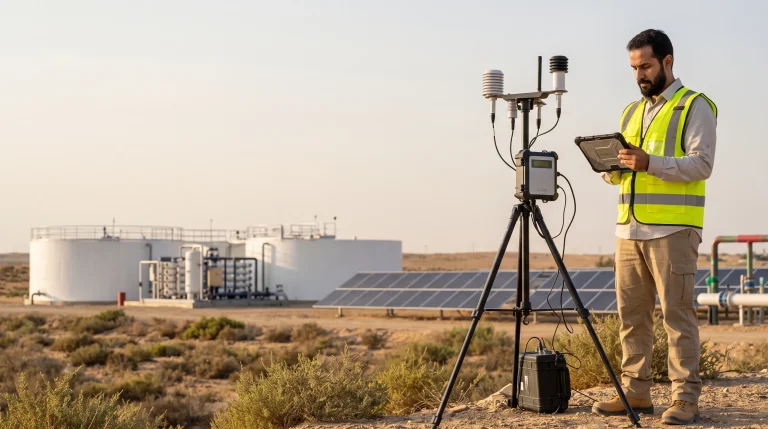
Air quality monitoring for industrial facilities encompasses a set of interrelated activities aimed at assessing emissions and their environmental impact, including:
- Measuring harmful gases such as sulfur dioxide, nitrogen oxides, and carbon monoxide.
- Monitoring particulate matter (PM2.5 and PM10) inside and outside the facility.
- Tracking organic and volatile chemical substances in the vicinity of the plant.
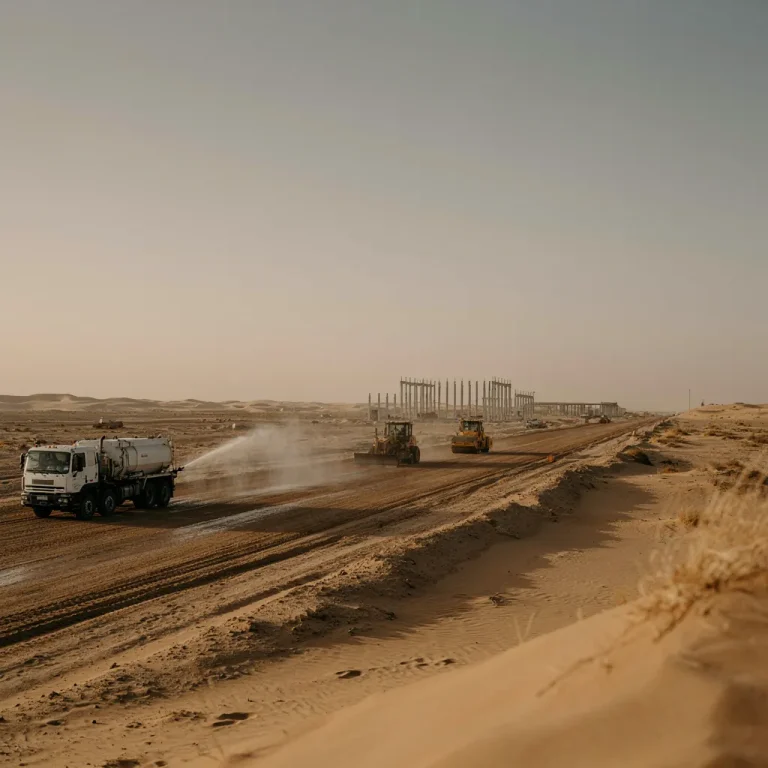
- Studying the impact of emissions on surrounding soil and water resources.
- Identifying critical points based on stack locations and nearby industrial zones.
These measures ensure compliance with environmental standards, reduce health and environmental risks, and provide accurate data for regulatory reporting.
Approved national and international standards
Industrial facilities in Saudi Arabia follow strict standards to safeguard the environment and society, most notably:
- SASO and NCEC standards, which set limits on industrial emissions and ensure local air quality.
- WHO and EPA guidelines, which provide a global framework for comparing emissions and pollutant exposure limits.
- Temporal and spatial standards that define monitoring frequency and sampling locations.
By applying these standards, Al-Buad Environmental Company ensures that all measurement data are reliable and suitable for use in environmental compliance reporting.
Emission Measurement Methodologies and Instrument Calibration
Before initiating any measurements, it is essential to understand emission measurement methodologies to ensure the collection of accurate and continuous data on air quality from stacks and industrial areas.
Methods for measuring gaseous and particulate emissions
Emission measurement methods include:
- Continuous Emissions Monitoring Systems (CEMS): Permanently installed systems that provide real-time data on gaseous and particulate emissions.
- Intermittent monitoring:Sampling at specific intervals to compare results and verify periodic compliance.
- Laboratory analysisAnalyzing collected samples to determine concentrations of organic and volatile gases and heavy metals.
- Use of internationally compliant instruments: To ensure the accuracy and reliability of results.
Calibration requirements and data quality assurance
Strict calibration protocols must be followed to obtain precise results:
- Calibrating instruments before each use to confirm measurement accuracy.
- Using calibration certificates issued by accredited and reliable laboratories.
- Periodic data quality checks to ensure the absence of deviations or anomalies.
- Training technical teams on proper operation and preventive maintenance.
Request a customized sampling plan tailored to your facility.
Sampling Plans for Air Quality and Emission Monitoring
Developing structured and systematic sampling plans is essential for monitoring air quality in industrial facilities and ensuring accurate and reliable measurement of emissions. Al-Buad Environmental Company applies advanced scientific methodologies to define monitoring locations and temporal frequency, ensuring compliance with national and international standards and enabling prompt corrective actions when required.
Sample stack sampling plan for an industrial facility
A stack sampling plan includes clearly defined elements to comprehensively cover all emissions:
- Identifying the types of gases and particulates to be monitored (SO₂, NOx, CO, PM2.5, PM10).
- Selecting approved equipment and tools for measurement and analysis.
- Establishing a clear schedule for daily, weekly, and monthly sampling.
- Documenting all measurements to ensure transparency and regulatory acceptance of reports.
Sampling frequency
Sampling frequency is a critical component of data quality assurance:
- Daily samplesTo monitor baseline emissions and verify continuous compliance.
- Weekly samplesTo assess seasonal trends or changes in production processes.
- Emergency samplesConducted following operational changes or unexpected exceedances.
Selection of monitoring locations and points
Air quality monitoring points within industrial facilities must be carefully selected to ensure comprehensive coverage:
- Near the facility stack to directly monitor emissions.
- Around the plant perimeter to evaluate the impact of emissions on the surrounding environment.
- At different elevations to capture emissions across multiple vertical levels.
- Near secondary pollution sources such as storage areas or production lines.
Permissible Emission Limits and Corrective Actions
Understanding permissible emission limits and implementing immediate corrective actions is critical to protecting both the facility and the environment, while ensuring regulatory compliance.
Approved emission limits in Saudi Arabia
Saudi Arabia enforces strict emission limits in line with national and international standards, including:
- SO₂:Approximately 500 mg/m³, depending on the type of facility.
- NOxApproximately 400 mg/m³.
- Dust and particulate matter (PM10): 150 mg/m³.
Facilities must also comply with maximum allowable daily and monthly emission thresholds.
Immediate corrective actions in case of exceedance
Rapid-response measures are applied to mitigate impacts when permitted limits are exceeded, including:
- Temporarily adjusting or halting operations responsible for elevated emissions.
- Optimizing filtration devices and emission control systems.
- Recalibrating monitoring instruments to ensure data accuracy.
- Promptly documenting all actions and submitting reports to regulatory authorities.
These steps ensure swift response, reduce legal and environmental risks, and strengthen the facility’s reputation for compliance, with direct support from Al-Buad Environmental Company.
Preparation and Submission of Compliance Reports to Relevant Authorities
The preparation of environmental compliance reports is a central step in demonstrating commitment and transparency to regulatory bodies, while providing accurate data to support operational decisions and improve facility performance. Al-Buad Environmental Company assists industrial facilities in designing these reports in a practical and professional manner.
Components of environmental compliance reports
Environmental compliance reports typically include several core elements to ensure regulatory acceptance:
- A general overview of the facility’s operations and environmental activities.
- Results of air quality monitoring and emission measurements over specified time periods.
- Analysis of deviations or exceedances, with clarification of potential causes.
- Records of sampling plans, monitoring equipment, and calibration procedures.
- Corrective actions taken when necessary, with full documentation of outcomes.
- Recommendations for continuous improvement and mitigation of environmental impacts.
Submission mechanism to regulatory authorities
Submitting reports requires adherence to clearly defined steps, including:
- Internal review of the report to verify data accuracy and adequacy.
- Use of official digital platforms of Saudi environmental authorities.
- Submission within the prescribed timelines for each emission category.
- Retention of documented copies as internal references and evidence for future audits.
Al-Buad Environmental Company provides comprehensive support to ensure that each step fully complies with applicable regulations and standards.
Air Quality Monitoring Tools and Equipment and Maintenance Requirements
Selecting appropriate emission monitoring equipment and ensuring regular maintenance are fundamental to obtaining accurate, reliable, and sustainable data, while enhancing the facility’s overall environmental performance.
Continuous Emissions Monitoring Systems (CEMS)
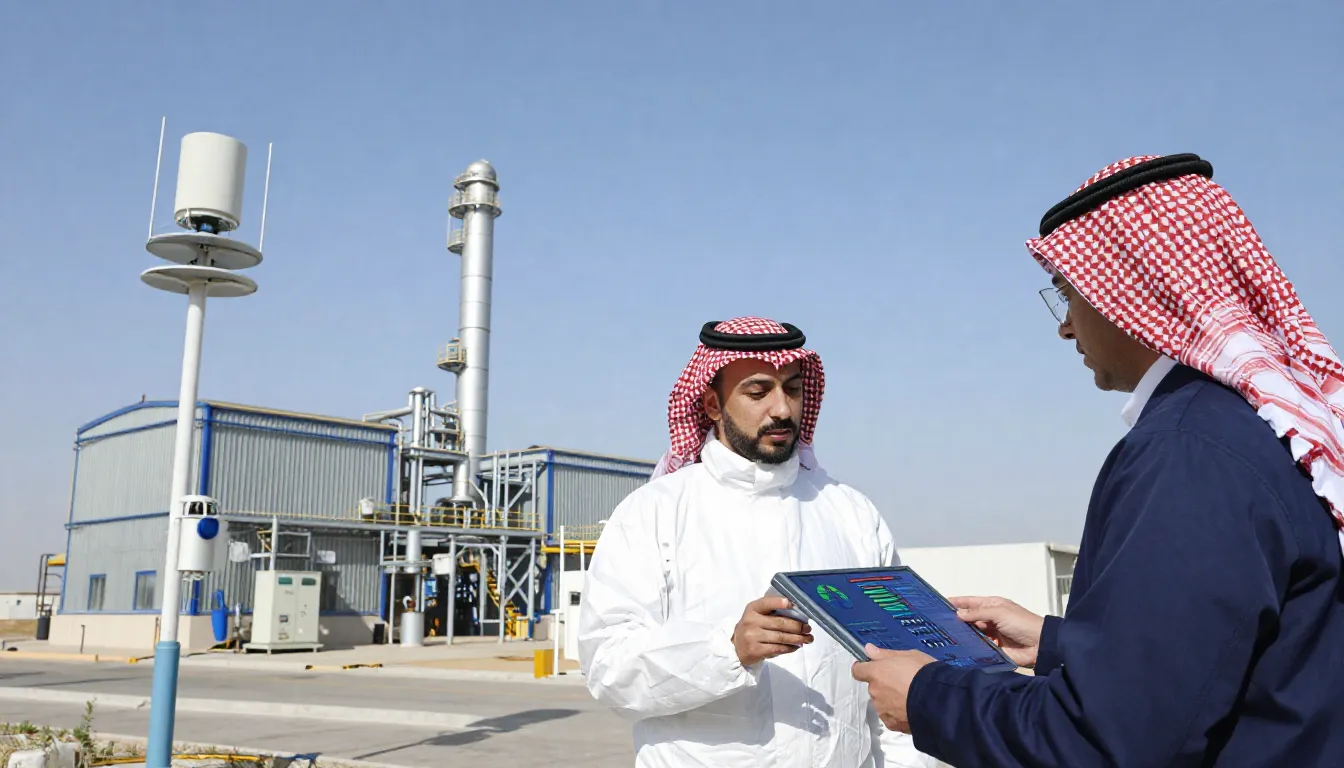
Continuous Emissions Monitoring Systems (CEMS) represent the optimal solution for facilities requiring real-time monitoring:
- Provide continuous, real-time measurement of gas and particulate concentrations.
- Enable early detection of any exceedance of permitted limits.
- Compliant with international standards, ensuring data acceptance in official reports.
- Higher in cost compared to intermittent monitoring, but offering superior reliability and long-term accuracy.
Al-Buad Environmental Company also provides customized installation and operation solutions tailored to different types of industrial facilities.
Intermittent stack emission monitoring
Intermittent monitoring relies on sampling at specific intervals and serves as a flexible alternative:
- Lower cost than CEMS and requires simpler equipment.
- Suitable for facilities with variable production or those not requiring continuous monitoring.
- Allows comparison of results against legal limits and periodic verification of compliance.
Maintenance and long-term operational requirements
To maintain data accuracy and equipment efficiency, the following practices should be implemented:
- Conduct regular maintenance of all monitoring and calibration equipment.
- Train technicians on proper operation and rapid troubleshooting.
- Maintain detailed maintenance records to reduce risks and ensure continuous compliance.
Al-Buad Environmental Company offers long-term monitoring and maintenance programs to support facilities in operating monitoring systems efficiently and minimizing total ownership costs.
Frequently Asked Questions:
What is the difference between ambient air quality monitoring and stack emission monitoring?
Ambient air monitoring measures air quality in the environment surrounding the facility, whereas stack monitoring focuses on emissions released directly from industrial sources.
How often should emissions be measured in industrial facilities?
According to applicable standards, emissions should be measured periodically on a daily or weekly basis, with additional sampling during operational changes.
Are CEMS systems mandatory in Saudi Arabia?
Not all facilities are required to install CEMS; however, they are mandatory for large facilities with high emission levels to ensure continuous and accurate monitoring.
Which authorities are responsible for regulating air quality in the Kingdom?
The Saudi Environmental Authority, the Ministry of Industry and Mineral Resources, and the National Center for Environmental Compliance.
What happens if permitted emission limits are exceeded?
Immediate corrective actions are implemented, such as adjusting operations or activating control systems, with proper documentation and notification of the relevant authorities.
Can intermittent monitoring alone be relied upon?
In some cases, yes; however, it is less accurate than continuous monitoring and may not detect sudden violations.
What is the cost of installing a continuous emission monitoring system?
Costs vary depending on facility size and emission types; they are higher than intermittent monitoring but provide superior accuracy and data continuity.
How can I ensure regulatory acceptance of compliance reports?
By using accurate data, fully documenting sampling and calibration plans, submitting reports within required timelines, and leveraging the support of Al-Buad Environmental Company.
Monitoring air quality in industrial facilities, implementing precise sampling plans, and preparing environmental compliance reports are no longer optional—they are essential for regulatory compliance and environmental protection. With the expertise of Al-Buad Environmental Company, your facility can implement accurate and effective monitoring systems and comply with Saudi and international standards with confidence.
Start today by protecting your facility and the environment: Contact Al-Buad Environmental Company for a comprehensive consultation and a customized monitoring plan tailored to your needs.
The content was reviewed by a team of environmental experts.
Environmental content at Al-Ba’ad Al-Bia’i Environmental Consulting Company is prepared and reviewed by a team of specialists in environmental studies, environmental impact assessment, environmental compliance, and environmental monitoring.
Meet the expert team