 966535733690 +


Environmental Impact Assessment: When Is It Mandatory?

Environmental Impact Assessment: When Is It Mandatory?
Imagine you are about to launch a major project: a factory, a residential complex, or even a power plant. Everything seems ready—financing, design, location… but suddenly, everything comes to a halt because of a single document. Not a municipal permit, nor an investment approval, but an Environmental Impact Assessment (EIA) study.
This type of study is no longer a mere formal or paperwork procedure as some may think; it has become a decisive factor in the success or delay of any project. Regulatory authorities are becoming stricter, society is more aware, and the environment can no longer تحمل planning mistakes. In this article, we will take you on a comprehensive journey to understand when this study is mandatory and why it ultimately works in your favor before being a legal obligation.
Table of Contents
- What is an Environmental Impact Assessment and what is its purpose?
- Types of projects that often require an EIA study
- Contents of the study: baseline, impacts, and management plan
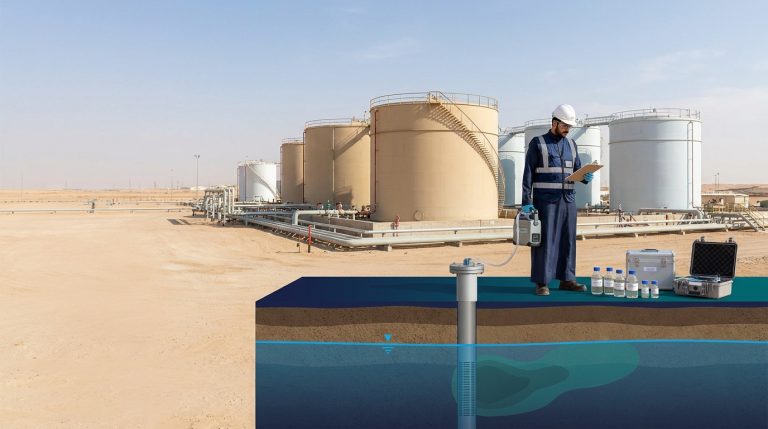
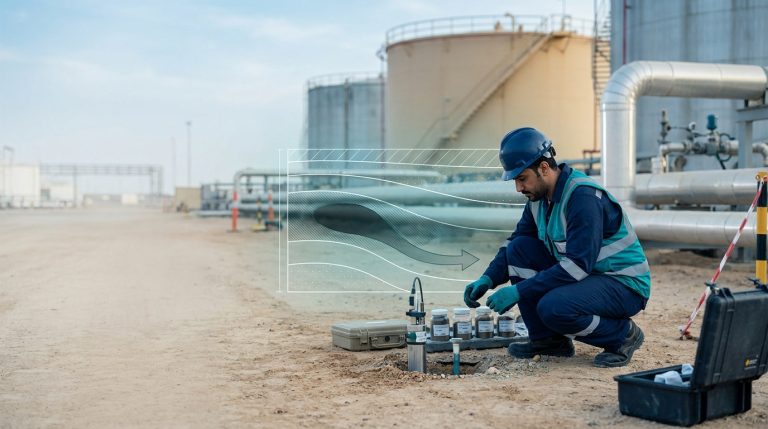
- Field data collection: air, noise, water, and soil
- Mistakes that delay study approval and how to avoid them
- How to choose a consultant/firm to prepare a high-quality study?
What is an Environmental Impact Assessment and what is its purpose?
An Environmental Impact Assessment (EIA) study for projects is a scientific and systematic analysis aimed at identifying the potential environmental impacts of a proposed project—whether direct or indirect, short-term or long-term. The primary objective is not to hinder projects, but to ensure they are implemented responsibly in a way that minimizes harm and maximizes benefits.
The main objectives of the study include:
- Protecting natural resources such as air, water, and soil.
- Ensuring the health and safety of residents and workers.
- Assisting decision-makers in approving, modifying, or rejecting a project based on accurate data.
- Proposing practical mitigation measures to reduce negative impacts.
It is important to understand that an Environmental Impact Assessment is not a theoretical report, but a practical planning tool used from the earliest stages of a project.
Request your Environmental Impact Assessment study now
Types of projects that often require an EIA study
Not all projects are equal in terms of environmental impact. Some activities are almost always required to prepare an Environmental Impact Assessment, particularly those involving risks or significant environmental changes. Key examples include:
- Industrial projects (factories, refineries, heavy production lines).
- Energy projects (power plants, large-scale solar and wind farms).
- Infrastructure projects (highways, bridges, ports).
- Major real estate developments (residential cities, resorts).
- Waste management and water treatment projects.
- Mining and raw material extraction projects.
The larger the project or the more environmentally sensitive its location, the higher the likelihood that an EIA study will be mandatory.
Contents of the study: baseline, impacts, and management plan
Any approved Environmental Impact Assessment study must include essential components that form the backbone of the evaluation process.
First: Baseline Conditions
This involves describing the current environmental status before project implementation, including:
- Existing air quality.
- Noise levels.
- Surface and groundwater conditions.
- Soil characteristics.
- Environmental and social conditions of the surrounding population.
Second: Identification and Evaluation of Impacts
This stage analyzes how the project will affect these elements during:
- The construction phase.
- The operational phase.
- The closure phase (if applicable).
Third: Environmental Management Plan (EMP)
This is the most practical and critical section, including:
- Pollution control measures.
- Environmental monitoring programs.
- Emergency response plans.
- Compliance and follow-up mechanisms.
A strong Environmental Management Plan reflects the project’s seriousness and significantly facilitates the approval of the Environmental Impact Assessment by the competent authorities.
Field data collection: air, noise, water, and soil
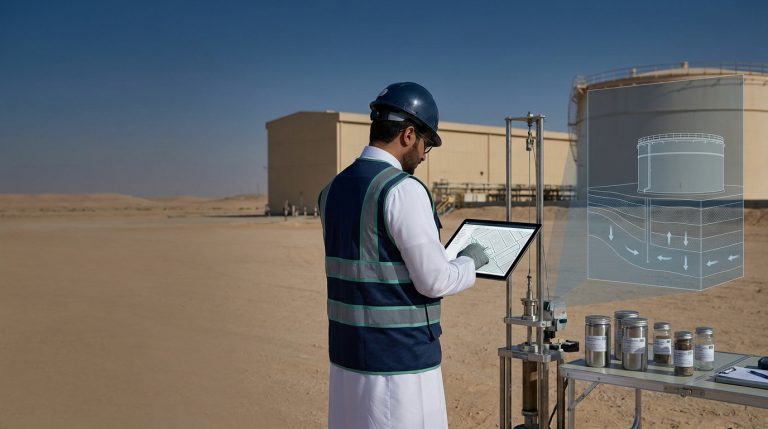
No study holds value without accurate field data. Data collection is the most sensitive stage—often the most costly—but it is the foundation of quality.
Field measurements typically include::
- Measuring air pollutants such as PM10, PM2.5, and gaseous emissions.
- Measuring noise levels at different times of the day.
- Chemical and biological analysis of water samples.
- Examining soil characteristics and contamination potential.
Any flaw at this stage may result in the rejection of the Environmental Impact Assessment (EIA) study or a request for its revision, causing costly delays. This is where the importance of engaging professional consultants becomes evident—such as the Environmental Dimension Company team, known for its precision, use of certified measurement equipment, and extensive field expertise.
Mistakes that delay study approval and how to avoid them
Many studies are rejected or returned—not necessarily because they are poor in quality, but due to avoidable mistakes.
The most common errors include::
- Using outdated or non-representative site data.
- Copying generic content that does not reflect the nature of the project.
- Weak environmental management plans.
- Ignoring social aspects.
- Failing to comply with the templates and requirements of the competent authority.
To avoid these issues, an Environmental Impact Assessment should be treated as a long-term investment rather than merely a required document. Choosing an experienced consulting firm saves time, money, and administrative complications.
How to choose a consultant/firm to prepare a high-quality study?
Selecting the right consultant can mean the difference between quick approval and prolonged delays. Do not focus solely on price—evaluate quality and expertise.
- The firm’s experience with your specific type of project.
- Knowledge of local regulatory requirements.
- Availability of a multidisciplinary team.
- Ability to communicate effectively and follow through until final approval.
- A proven track record of successfully approved Environmental Impact Assessment studies.
Environmental Dimension Company is an example of firms that combine deep regulatory understanding with technical expertise, offering practical solutions rather than merely theoretical reports.
Frequently Asked Questions
Can the study be submitted after construction has started?
In most cases, no. Most authorities require approval of the Environmental Impact Assessment before issuing construction or operational permits. In exceptional cases, a corrective assessment may be requested, but it is typically more complex and costly.
How long does it usually take to prepare an Environmental Impact Assessment?
The duration varies depending on the size and complexity of the project. It typically ranges from two to six months, including fieldwork, office analysis, and review stages.
Do study requirements differ by city or industrial zone?
Yes. Technical requirements and details vary depending on the regulatory authority, the type of area, and its environmental sensitivity—making local expertise critically important.
Is it necessary to update the study if the design or location changes?
Any significant change in design or location may require updating the Environmental Impact Assessment or re-evaluating certain components, especially if the nature of the impacts changes.
In today’s project landscape, the environment is no longer a secondary consideration. An Environmental Impact Assessment has become a safeguard that protects your investment, strengthens the confidence of regulators and the community, and ensures genuine project sustainability.
If you are planning a new project or facing complex environmental requirements, choosing the right consulting partner is the smartest step. Albuad Environmental team is ready to support you—from the initial concept to final approval—with practical expertise, realistic vision, and implementable solutions.
Start today with the right step… the environment does not wait, and success begins with sound planning.
The content was reviewed by a team of environmental experts.
Environmental content at Al-Ba’ad Al-Bia’i Environmental Consulting Company is prepared and reviewed by a team of specialists in environmental studies, environmental impact assessment, environmental compliance, and environmental monitoring.
Meet the expert team