 966535733690 +


Biodiversity in Infrastructure Projects: Impact Assessment and Mitigation Plan

Urban development and infrastructure projects are expanding worldwide at an accelerating pace, ranging from highways and railways to airports, dams, and power plants. With this expansion comes a significant environmental responsibility, as any infrastructure project can directly or indirectly impact biodiversity. Preserving biodiversity in infrastructure projects is not merely a legal or procedural requirement; it is a long-term investment in environmental sustainability, the protection of natural habitats, and the continuity of ecosystem services that support both wildlife and human communities alike. The primary challenge facing engineers and planners is achieving a balance between economic development and environmental protection. Without clear strategies for environmental impact and biodiversity assessment, large projects can lead to the loss of critical habitats, threaten local species, and disrupt important ecological corridors. Consequently, the development of mitigation strategies and biodiversity management plans has become an integral part of the planning and implementation phases of any modern infrastructure project. In this article, we will discuss the concept of biodiversity, how to assess the impact of projects on it, and the key mitigation strategies and biodiversity management plans, along with success indicators and post-operation monitoring.
Table of Contents:
- What is Biodiversity and Why Does It Matter for Infrastructure Projects?
- Where Does Environmental Impact Occur? (Habitats, Species, Ecological Corridors)
- Steps to Assess Biodiversity Impact Before Implementation
- The Mitigation Hierarchy: Avoid – Minimize – Restore – Offset
- Biodiversity Management Plan (BMP): Its Components and How It Is Prepared
- Success Indicators and Post-Operation Monitoring
What is Biodiversity and Why Does It Matter for Infrastructure Projects?
Biodiversity refers to the variety of living organisms on Earth, including plants, animals, microorganisms, and the ecosystems that support them. It encompasses genetic diversity within species, the diversity of species themselves, and ecosystem diversity that links these species together. Biodiversity is a fundamental element in maintaining ecological balance. Every project affects the surrounding ecosystem, whether through the removal of vegetation, destruction of natural habitats, or fragmentation of ecological corridors. The loss of biodiversity can lead to a decline in vital ecosystem services such as water purification, soil fertility, pollination, and natural pest control. The importance of focusing on biodiversity in infrastructure projects is reflected in the following:
- Protecting native species and preventing their extinction.
- Ensuring the continuity of ecological corridors that enable migration and reproduction.
- Maintaining the health of ecosystems that support human activities.
- Complying with national and international environmental laws and standards.
Therefore, integrating biodiversity assessment into the design and implementation stages of a project is not a luxury but a necessity to ensure sustainable development and reduce environmental and social risks.
Contact us on WhatsApp to obtain a ready-made Mitigation Plan and Biodiversity Management Plan (BMP) for your project.
Where Does Environmental Impact Occur?
The impacts of infrastructure projects on biodiversity appear at several critical levels and locations:
- Natural Habitats::
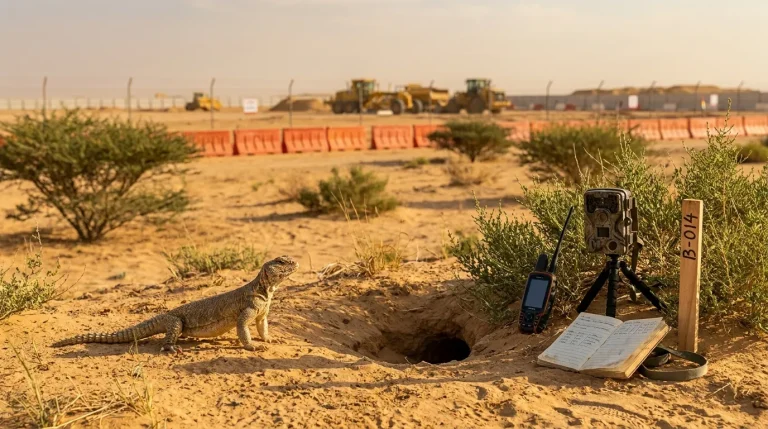
The construction of roads, bridges, or power plants often requires vegetation clearance, soil excavation, and land-use change. These activities can destroy or alter natural habitats such as forests, wetlands, marshes, and coral reefs, leading to the loss of environments that support living organisms. - Species:
Direct impacts on species may include the killing or displacement of animals, destruction of bird nests, or the loss of rare plant species. Some projects require cutting migration routes or altering watercourses, which hinders species’ ability to access their natural habitats and increases pressure on biodiversity. - Ecological Corridors:
Ecological corridors are networks of connected natural habitats that allow wildlife to move between areas for feeding, breeding, and adapting to seasonal changes. Large infrastructure projects—such as highways or railway lines—can sever these corridors, causing ecological isolation that leads to genetic decline and an increased risk of local extinction for certain species.
In addition to the above, environmental impacts may also occur at the soil, water, and air levels. Excavation and heavy machinery operation can contaminate soil, increase erosion, and redirect stormwater into areas unsuitable for native species.
Accordingly, when planning any infrastructure project, it is essential that the environmental impact assessment on biodiversity includes a comprehensive study of all habitats, species, and ecological corridors to identify sensitive areas and develop effective mitigation strategies before implementation begins.
Steps to Assess Biodiversity Impact Before Implementation
Biodiversity Impact Assessment It is a systematic process used to identify and analyze potential changes that may result from a project on local ecosystems. The assessment steps prior to implementation include:
- Primary Data Collection:
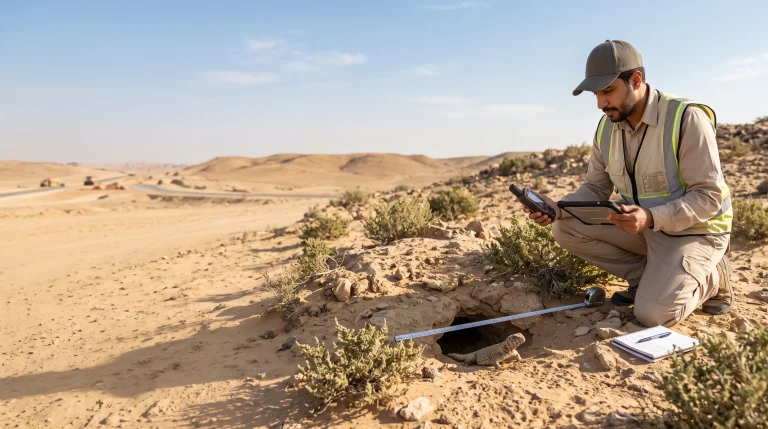
Studying the current site, identifying existing plant and animal species, documenting natural habitats, and understanding the geographic distribution of ecological corridors. - Analysis of Direct and Indirect Impacts:
Assessing the effects of vegetation removal, excavation, operation of heavy machinery, and land-use change on species and habitats. - Identification of Sensitive Species and Protected Areas:
Focusing on endangered or legally protected species, and habitats that provide essential ecosystem services such as water purification or erosion control. - Assessment of Habitat Connectivity:
Studying how ecological corridors are connected and evaluating the project’s impact on migration and reproduction. - Consultation with Experts and Stakeholders:
Engaging with ecologists, government authorities, and the local community to identify potential environmental risks and propose mitigation measures. - Preparation of the Impact Assessment Report:
The report should include a project description, baseline environmental data, impact evaluation, and environmental recommendations, along with proposed mitigation priorities.
Following these steps ensures that biodiversity in infrastructure projects is accurately assessed before implementation and supports design decisions that minimize environmental impacts and preserve local ecosystems.
The Mitigation Hierarchy: Avoid – Minimize – Restore – Offset
The mitigation hierarchy is the most widely adopted global framework for reducing the impacts of infrastructure projects on biodiversity. It consists of four levels:
- Avoidance:
The primary objective is to prevent environmental impacts from occurring in the first place. This can be achieved through project redesign, selecting less sensitive sites, or postponing activities in critical areas during breeding seasons. - Minimization:
When impacts cannot be fully avoided, techniques are applied to reduce harm, such as using low-noise equipment, constructing wildlife crossings (bridges or tunnels), and adopting excavation and construction methods that limit erosion and pollution. - Restoration:
After implementation, affected habitats are restored as closely as possible to their natural condition, for example through re-vegetation, cleaning contaminated habitats, or rehabilitating areas disturbed by physical impacts. - Offset / Compensation:
If certain impacts cannot be minimized or restored, compensation is provided by creating alternative habitats or supporting species conservation programs in other locations.
Applying this hierarchy ensures that all mitigation measures are structured, measurable, and implemented in the appropriate order. Any biodiversity-related plan within infrastructure projects must adhere to this approach to reduce environmental risks and comply with international standards.
Biodiversity Management Plan (BMP): Its Components and How It Is Prepared
Biodiversity Management Plan (Best Management Practices – BMP) is a practical document that guides all activities related to biodiversity protection throughout the project lifecycle. Its core elements include:
- Project and Site DescriptionDefining the project scope, affected areas, and key species and habitats.
- Risk and Impact AssessmentAnalyzing direct and indirect impacts on biodiversity.
- Mitigation StrategyApplying the mitigation hierarchy (avoid, minimize, restore, offset).
- Daily Operational ProceduresClear instructions for workers on how to handle habitats and species during implementation.
- Monitoring and Tracking PlanEnvironmental performance indicators, inspection schedules, and environmental emergency reporting.
- Documentation and ReportingRecording all activities, monitoring results, and any non-compliances and how they are addressed.
When drafting a BMP, the language should be clear, procedures practical, and recommendations measurable. Collaboration with environmental experts—such as the Al-Buad Environmental team—facilitates the preparation of an accurate and effective plan that ensures legal compliance and reduces the project’s environmental impact on biodiversity in infrastructure projects.
Success Indicators and Post-Operation Monitoring
After project completion, biodiversity protection does not end with the construction phase; performance must be monitored to ensure the effectiveness of implemented measures. Success indicators include:
- Habitat IndicatorsConservation of natural areas, successful vegetation rehabilitation, and recovery rates of aquatic habitats.
- Species IndicatorsPersistence of species, reproduction rates, and reduction in project-related mortality.
- Ecological Corridor IndicatorsContinued animal movement between habitats without barriers to natural migration.
- Environmental Quality IndicatorsWater and soil quality in affected areas and reduced project-related pollutants.
- Periodic reporting:Monthly or annual monitoring schedules, assessment of operations teams’ compliance with the BMP, and corrective actions when needed.
Post-operation monitoring ensures that mitigation and biodiversity management measures achieve the intended outcomes, preserves biodiversity in infrastructure projects over the long term, strengthens regulatory compliance, and reduces legal risks.
Frequently Asked Questions
Is biodiversity impact assessment mandatory for all infrastructure projects?
Yes. In most countries, large projects or those located in environmentally sensitive areas require a biodiversity impact assessment before any permit is issued.
What is the difference between impact avoidance and environmental offsetting within a mitigation plan?
Avoidance focuses on preventing any impact on biodiversity, whereas offsetting addresses unavoidable damage by creating or supporting alternative habitats or protecting species elsewhere.
What baseline data are required to prepare a pre-project biodiversity assessment?
- Lists of existing and endangered species
- Mapping of habitats and ecological corridors
- Soil and water quality information
- Seasonal data on breeding and migration
How is the effectiveness of biodiversity protection measures measured after operation?
By tracking indicators related to habitats, species, ecological corridors, soil and water quality, and continuous monitoring records under the BMP, with updates as needed.
In conclusion, attention to biodiversity in infrastructure projects is not a luxury but an environmental and legal necessity to ensure project sustainability and reduce legal and financial risks. Early assessment, application of the mitigation hierarchy, and implementation of a biodiversity management plan with robust monitoring indicators are all essential to protecting the environment and conserving species and habitats.
If you are planning an infrastructure project and seek full compliance while safeguarding biodiversity, the Al-Buad Environmental team can provide integrated support—from impact assessment and mitigation planning to developing a biodiversity management plan and post-operation performance monitoring—to ensure the desired outcomes.
Start today with a practical step to protect the environment, enhance your project’s reputation, and ensure long-term sustainable development.
The content was reviewed by a team of environmental experts.
Environmental content at Al-Ba’ad Al-Bia’i Environmental Consulting Company is prepared and reviewed by a team of specialists in environmental studies, environmental impact assessment, environmental compliance, and environmental monitoring.
Meet the expert team