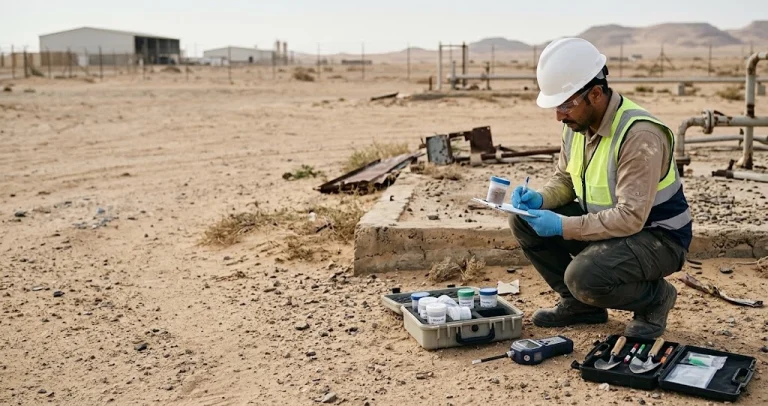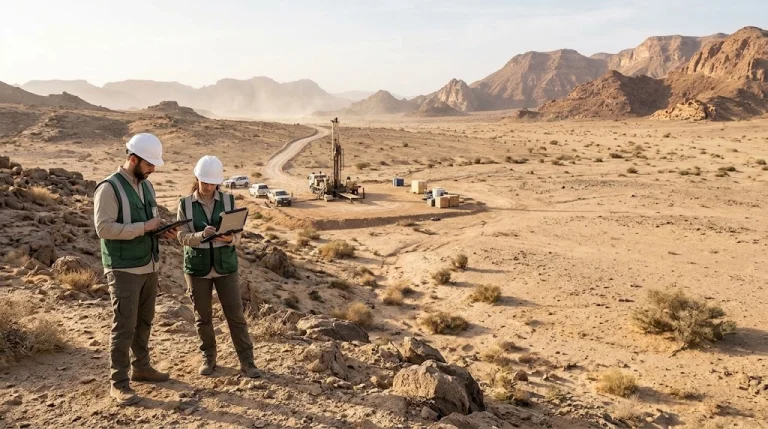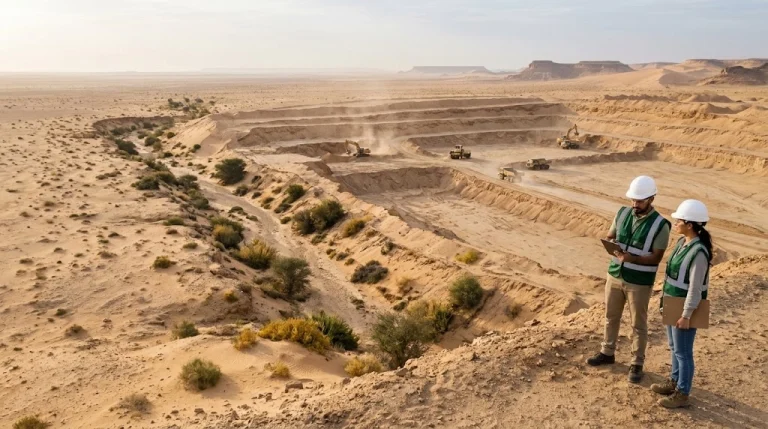
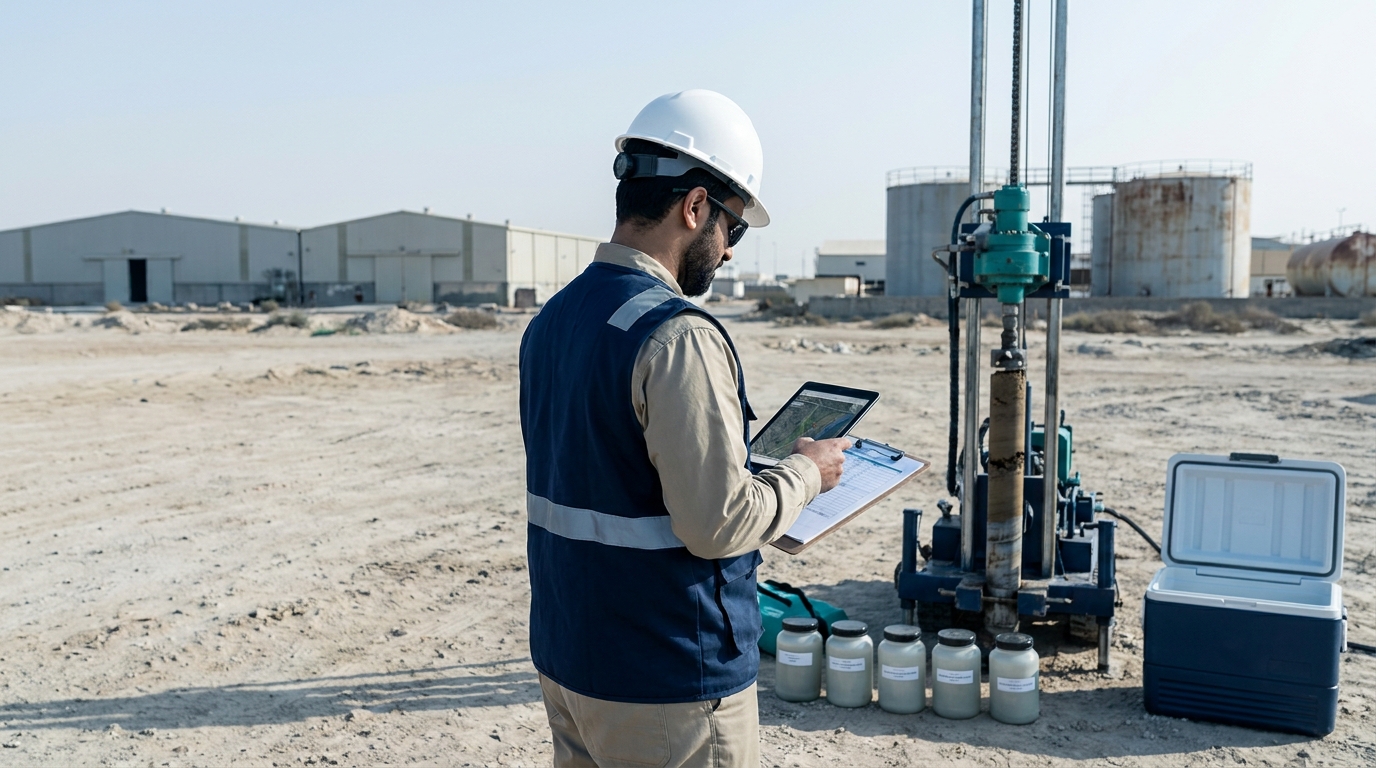

An industrial land or existing facility may seem suitable in terms of price, location, and infrastructure, but its current appearance does not necessarily reveal the site's environmental history. The site may have been previously used for fuel storage, equipment maintenance, handling chemicals, or operating an industrial facility, after which the buildings were removed or the use changed, leaving questions that need verification.
Direct answer: Focuses Phase I ESA focuses on reviewing site history, available information, site inspection, and interviews to identify indicators or conditions of concern. Meanwhile, Phase II ESA is a targeted field investigation that may include boreholes, sampling, and analyses to assess the presence of target materials within a specific scope. Phase II does not necessarily have to be conducted after every Phase I; rather, it is determined based on the questions left unresolved by the first phase and the decision goal.
Why evaluate the site before purchasing or developing it?
Removing buildings or above-ground equipment does not necessarily mean the site is free from historical environmental impact. Depending on the material type and site conditions, the impact may transfer to topsoil, deep soil, soil vapor, or groundwater. Therefore, an environmental assessment helps reduce uncertainty before acquiring a property, purchasing a plant, securing financing, redeveloping, or changing land use.
In Saudi Arabia, the work of the National Center for Environmental Compliance (NCEC) includes initiatives related to assessing and rehabilitating degraded sites and polluted hotspots, including inventorying sites, identifying the causes of damage, and setting priorities for rehabilitation. Check out the initiative from the National Center for Environmental Compliance.
The difference between Phase I and Phase II ESA
| Element | Phase I ESA | Phase II ESA |
|---|---|---|
| Objective | Identify evidence, circumstances, and potential risks. | Test specific questions or hypotheses using field and analytical data. |
| Nature of work | Reviewing site records and history, visual inspection, interviews, and professional evaluation. | Targeted intrusive investigation that may include drilling, soil borings, monitoring wells, and sampling. |
| Outcome | Are there professional reasons for further investigation? | What do the sample data say about the target substance within the investigation scope? |
| Laboratory samples | Usually not part of the basic scope. | May be a key part of the study when needed. |
| Scope | Affected by the property, transaction goal, and available information. | Determined by the site conceptual model, investigation goals, and areas of concern. |
Important Notice: Is ASTM a Saudi system?
The ASTM E1527-21 standard for Phase I and ASTM E1903-19 for Phase II investigations are used as common international technical frameworks when appropriate or contractually required. However, they are not Saudi legislation and do not replace the Environment Law or applicable regulations, requirements, and conditions in the Kingdom.
In practical terms: ASTM can structure the investigation methodology, while the Saudi context determines the regulatory requirements applicable to the activity, site, or rehabilitation plan. Therefore, the scope of the study must be aligned with the transaction goal, the nature of the activity, the future use of the land, and the requirements of the competent authority.
What does a Phase I ESA typically include?
Site History Review
The primary goal is to understand: What happened at this site previously? Depending on availability and relevance, historical maps, historical aerial photographs, blueprints, use records, previous reports, neighboring activity information, and ownership and operational information can be utilized.
The timeline might reveal that the land was an equipment workshop, then an oil warehouse, and then a logistics warehouse. This does not prove contamination, but it changes the questions that must be asked and identifies potential sources or areas of concern.
Site Inspection
Documents alone are not enough. During the site visit, indicators worth evaluating may appear, such as old tanks or fill and vent pipes, chemical or fuel storage areas, unusual stains or odors, floor drains, oil/water separators, unknown drums or materials, or historical filling or loading and unloading areas.
Observation is not proof of contamination. The mere presence of a tank or stain does not prove by itself that the soil or groundwater has been affected. However, it constitutes information that is read alongside the history, interviews, and other evidence to build a verifiable hypothesis.
Interviews and Review of Previous Reports
Interviews may add information that does not appear in documents, such as the presence of a previously removed tank or a spill near a loading area. However, oral information is not a confirmed fact on its own; rather, it is treated as a signal that needs to be compared with other sources.
Any previous soil or groundwater studies, spill reports, tank removal reports, or remediation reports must also be reviewed. An old report does not mean the current status is known; the study date, scope, number and depths of samples, analytical materials, data quality, and whether new activities took place after its preparation must be verified.
What are Recognized Environmental Conditions (RECs)?
ASTM E1527-21 uses the term Recognized Environmental Condition (REC) within its specific context. In educational and simplified terms, it can be understood as the presence of information or evidence that gives the professional a technical reason to suspect a current, past, or potential release of materials that warrants further evaluation.
However, when preparing an official report according to a specific standard, one must refer to the text of the standard and its applicable definitions, not to the abbreviations mentioned in articles. Nor should the presence of an REC be turned into the phrase "the site is contaminated", because this requires field evidence and analysis if the question requires confirmation.
When do you move to a Phase II ESA?
Phase II is used when questions arise that cannot be resolved by records and inspection alone. For example: a site that was a gas station for years, with evidence of underground storage tanks, an incomplete record of the removal of one of them, and an area of concern near the fill points. This does not prove contamination, but it justifies a clear question: Is there a petroleum impact in the soil, deeper layers, or groundwater?
Phase II may also be appropriate when there are known releases, a need for a higher level of certainty before financing or purchasing, a contractual requirement, or a need for data to estimate the cost of risks or redevelopment.
How is the scope of Phase II properly designed?
Studies do not start with a rigid decision like "we need twenty samples." They start with the question that needs to be answered. Then is built The Conceptual Site Model (CSM) which links the historical site use, potential contamination source, migration pathways, affected media, and potential receptors.
Depending on the objective, the scope of investigation may include:
- Identifying areas of concern and potential contaminants of concern (COPCs).
- Selecting media to be tested: soil, groundwater, soil vapor, sediments, etc.
- Determining sample locations, depths, and their justification.
- Developing a sampling plan along with QA/QC assurance and quality control.
- Determining analytical methods and reporting limits appropriate for the required question.
- Managing drilling safety, equipment decontamination, and drill cuttings or water where applicable.
- Documenting sample chain of custody to the laboratory, reviewing results, and updating the conceptual model.
Guidance can be utilized from Environmental monitoring reports when needed to organize monitoring and analysis results and link them to the technical report.
What happens if Phase II shows the presence of target substances?
Detecting a substance does not mean remediation starts automatically. The next step may be determining the horizontal and vertical extent of the impact (Delineation), updating the conceptual model, evaluating risks and alternatives, and then developing a management or rehabilitation plan according to the case and applicable requirements.
In brief:
Field verification ← Scoping ← Risk assessment ← Management or remediation alternatives ← Implementation plan ← Verification and monitoring.
The difference between ESA and EIA
| ESA — Environmental Site Assessment | EIA — Environmental Impact Assessment |
|---|---|
| Focuses on the current and historical environmental condition of the site. | Focuses on the expected impacts of the proposed project and how to manage them. |
| Asks: What happened to the site? Are there environmental risks or questions? | Asks: What might the project cause to the environment? |
| Useful before purchase, acquisition, redevelopment, and risk assessment. | Useful in project planning and supporting assessment and permitting requirements when applicable. |
An old industrial site redevelopment project may need both studies, but for different purposes. To learn about the scope of work for project studies, please review the service Environmental Impact Assessment Studies and Auditing.
Why is the assessment beneficial for the investor and funder?
Potential environmental risks may affect asset value, redevelopment cost, timeline, bankability, and salability, and may require a budget for investigation, remediation, or contractual terms to distribute liability. Therefore, environmental assessment becomes part of due diligence alongside technical, legal, and financial review, rather than just a separate report kept in the archive.
Pre-purchase checklist for an industrial site or land with an operational history
- What are the past and current uses of the land?
- Were there fuel tanks, oil tanks, chemical tanks, maintenance workshops, or landfill areas?
- Are there environmental reports, spill records, or previous removal or remediation works?
- Are there field indicators, storage or loading areas, drains, or old equipment worth reviewing?
- What are the current or historical activities on neighboring properties?
- Is the site information sufficient to make an investment decision, or do you need Phase I?
- Did questions arise that necessitate Phase II or a targeted investigation?
- How might potential risks affect the price, timeline, and development plan?
Frequently Asked Questions
Does Phase I include soil analysis?
Sampling and chemical analysis are usually not part of the basic Phase I scope. When intrusive investigation is needed to verify a target substance, that falls under the nature of Phase II or a targeted environmental investigation.
Must Phase II be performed after every Phase I?
No. It is executed only when there are questions or circumstances requiring field and analytical data, or when a business or regulatory decision requires a higher level of certainty.
Can Phase I confirm that a site is 100% clean?
No. Phase I reduces uncertainty through available information, inspection, and professional evaluation, but it has limitations and does not eliminate every environmental possibility.
Is Phase II a remediation plan?
No. Phase II aims at investigation and characterization. Remediation or rehabilitation is determined later according to investigation results, risk assessment, and applicable requirements.
How does Al-Bad' Al-Bee'i help?
Al-Bad' Al-Bee'i supports investors, developers, and facilities in reviewing the site's environmental history, inspecting and identifying areas of concern, building the conceptual model, designing the appropriate investigation scope, and reviewing soil and groundwater data and laboratory results linked to coordinates and depths. Monitoring, analysis, and rehabilitation works are determined and coordinated with specialized service providers in accordance with the project scope and applicable requirements.
This does not mean guaranteeing that the site is free of risks or issuing approvals on behalf of competent authorities. The goal is to reduce uncertainty to a level that helps make an informed investment and technical decision.
Are you considering purchasing a factory, industrial land, or redeveloping a site with an operational history? Contact the Albuad Environmental Company team via WhatsApp To discuss the appropriate assessment scope for your goal.
The content was reviewed by a team of environmental experts.
Environmental content at Albuad Environmental Company is prepared and reviewed by a team of specialists in environmental studies, environmental impact assessment, environmental compliance, and environmental monitoring.
Meet the expert team