 966535733690 +


Environmental Inspection for Facilities: How to Prepare and Close Observations Quickly?

Imagine you are preparing for a normal day at your facility, and suddenly an environmental inspection is announced. It brings a mixed feeling of concern and anticipation, doesn’t it? But the reality is that an inspection is not just a routine process or a threat; it is a valuable opportunity to assess how well your facility complies with environmental standards and to improve your operational performance in a practical way.
Early preparation, knowing what inspectors are likely to look for, and understanding how to close observations quickly can turn an inspection from a stressful experience into a tool for strengthening sustainability and reducing legal risks. In this article, we will guide you step by step so you can be ready for any visit, and we will provide practical strategies to ensure the inspection proceeds smoothly.
Table of Contents
- What is usually checked during an environmental inspection?
- Records and documents that should always be ready
- Environmental safety requirements on site for daily operations
- Managing observations: how to close them with a clear corrective action plan
- Examples of recurring observations and how to prevent them from happening again
- An internal monthly audit template before any visit
What is usually checked during an environmental inspection?
Environmental inspection of facilities focuses on verifying that the facility operates within the approved legal and environmental limits. Inspectors usually check several key areas, including:
- Air emissions and water systems: ensuring that filters and treatment systems are operating properly
- Waste management: reviewing how solid and liquid waste is stored, sorted, and disposed of
- Compliance with environmental permits: ensuring that all activities align with the facility’s environmental classification and the permits issued
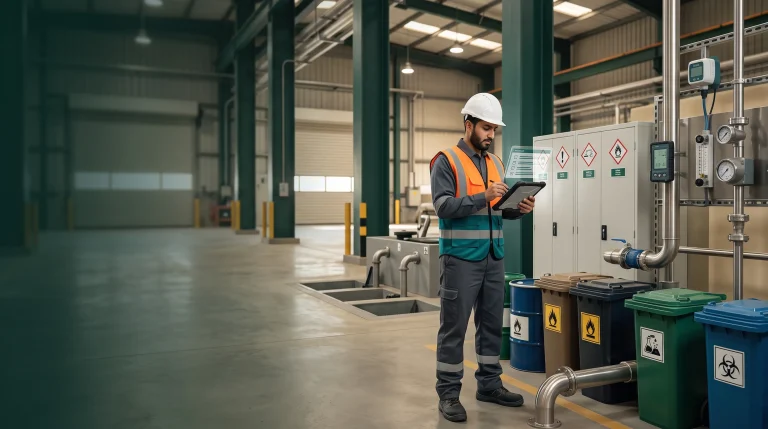
- Chemical safety and hazardous materials: inspecting the inventory and safe storage of chemicals and solvents
- Records and periodic reports: reviewing monitoring data and maintenance reports submitted to regulatory authorities
Knowing in advance what will be inspected helps your team prepare more effectively and reduces unpleasant surprises during the visit.
Need rapid support with environmental inspection for facilities?Contact us on WhatsApp now.
Records and documents that should always be ready
One of the most important keys to succeeding in an environmental inspection for facilities is having organized records that are ready when needed. Some of the documents that should always be available include:
- Operating licenses and environmental permits
- Monthly and annual monitoring reports for air and water
- Maintenance records for environmentally related equipment and machinery
- Environmental training and awareness records for employees
- Emergency, evacuation, and environmental incident response plans
Being prepared with documentation saves time and creates a positive impression of the facility’s professionalism and management.
Environmental safety requirements on site for daily operations
Preparation is not limited to paperwork alone; it also extends to daily operations within the facility. To ensure that the environmental inspection of facilities goes smoothly, the following daily environmental safety requirements should be maintained:
- Keeping work areas clean and preventing the accumulation of waste
- Ensuring that air and water treatment systems operate continuously
- Monitoring noise and vibration levels and reducing them whenever possible
- Safely storing chemicals and placing clear warning labels
- Training employees on how to respond to any environmental emergency
These practices make the inspection an opportunity to demonstrate your commitment, rather than just a routine test.
Managing observations: how to close them with a clear corrective action plan
Even the most compliant facilities may receive observations during an inspection. The key is to manage those observations quickly and effectively:
- Record the observation immediately: identify the person responsible for handling it and set a due date
- Analyze the root cause: determine whether it is an operational issue or a gap in training or equipment
- Prepare a clear corrective action plan: include the required actions, resources needed, and timeline
- Track implementation: monitor progress daily or weekly depending on the scale of the observation
- Document closure: once the solution is implemented, it should be documented in detail, with photos or supporting records
Using this system ensures that environmental inspection for facilities does not leave any observation unresolved and strengthens the facility’s image with regulatory authorities.
Examples of recurring observations and how to prevent them from happening again
There are some observations that tend to recur regularly, but they can be prevented by following simple measures:
- Failure to update maintenance records: the solution is to maintain a documented monthly maintenance schedule
- Unsafe storage of chemicals: the solution is to install dedicated storage cabinets and separate materials by type
- Accumulation of waste in undesignated areas: the solution is to train the waste-handling team and define clear collection points
- Air emissions exceeding allowable limits: the solution is to maintain filters and carry out periodic emissions monitoring
Learning from these recurring observations reduces the likelihood of repetition and saves considerable time and effort during inspections.
An internal monthly audit template before any visit
To avoid surprises, it is important to conduct a monthly internal audit before any official visit. An internal audit template may include:
- Reviewing permits and licenses and confirming their validity
- Checking all maintenance records and environmental reports
- Ensuring that all environmental safety systems are functioning properly
- Conducting an internal inspection tour to verify site cleanliness and safe storage practices
- Documenting any internal observations and preparing a plan to close them before the official inspection
This internal audit makes environmental inspection for facilities feel like a final review before an exam and increases the chances of receiving a positive assessment.
Frequently Asked Questions
Is the inspection always unannounced?
Not always. Some authorities provide advance notice, while in other cases the inspection may be unannounced to ensure actual compliance.
What should I do if I receive an observation that needs time to correct?
Prepare a clear corrective action plan and timeline, and inform the inspector of the steps being taken. Transparent communication strengthens the confidence of regulatory authorities.
Is having a third-party maintenance provider enough to prove compliance?
No, not by itself. All work should be documented with photos, invoices, and records to provide strong evidence of compliance.
Will there be a follow-up visit to verify closure?
Yes, in many cases the relevant authorities conduct a follow-up visit to confirm that the observations have been closed in accordance with the corrective action plan.
Finally, being prepared for environmental inspection of facilities is not just a legal obligation; it is also an opportunity to improve operations, reduce risks, and strengthen the facility’s standing with regulatory authorities. Advance planning, accurate records, and regular internal audits make the inspection process smooth and effective.
If you want your facility to remain ready for any inspection at all times, and you need an integrated system for closing observations quickly and accurately,Albuad Environmental team can help you develop internal audit plans, organize records, and implement environmental best practices.
Start preparing smartly today—because readiness means compliance, and compliance means sustainability and long-term success.
The content was reviewed by a team of environmental experts.
Environmental content at Al-Ba’ad Al-Bia’i Environmental Consulting Company is prepared and reviewed by a team of specialists in environmental studies, environmental impact assessment, environmental compliance, and environmental monitoring.
Meet the expert team