
 966535733690 +

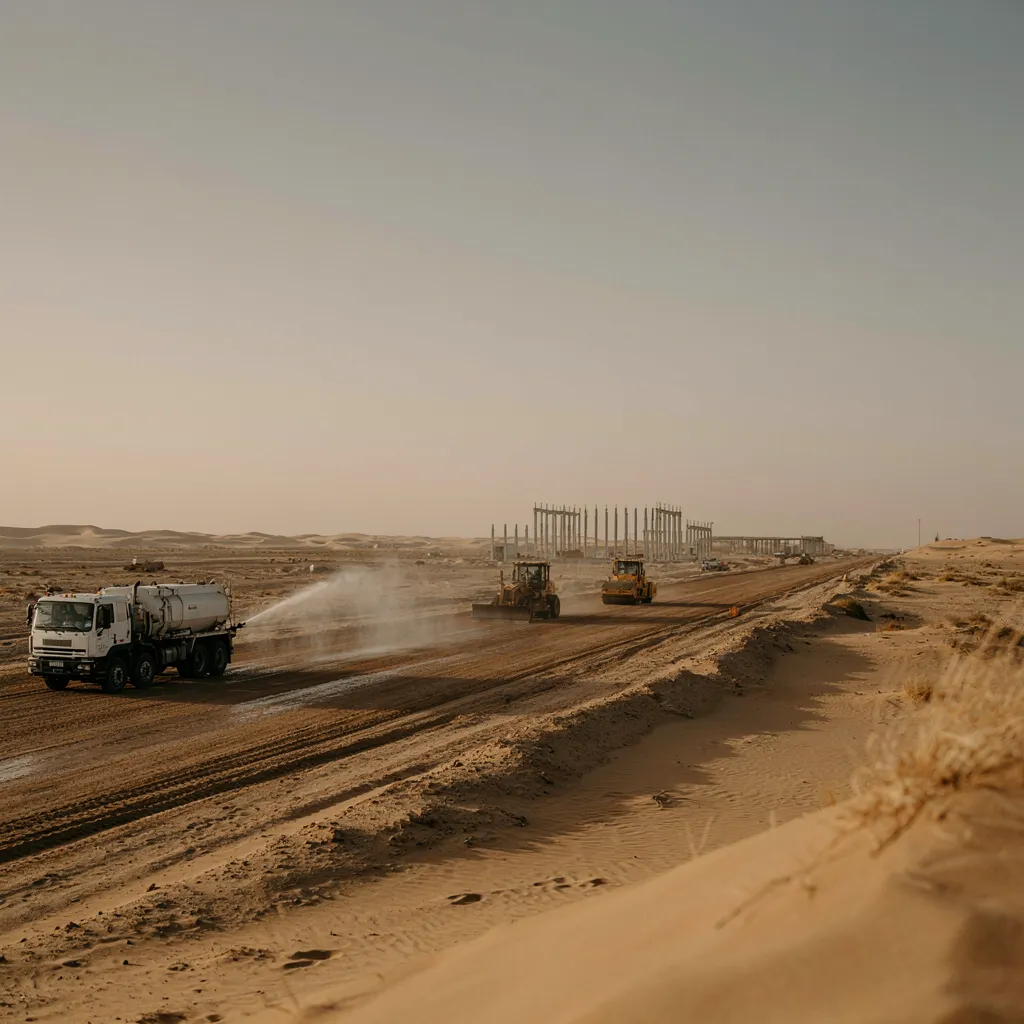
Dust emission management in a warehouse and service facility construction project

An anonymized case study for developing an integrated operational plan to control airborne dust during construction phases in Saudi Arabia.
Introduction: Why does a construction project need a dust management plan?
It is Airborne dust emissions One of the most common environmental problems in Construction sitesThis is especially true when the work includes site preparation, topsoil removal, excavation, backfilling, compaction, foundations, concrete work, masonry, yards, and exterior finishing. In this study, we review the team's experience. The environmental dimension of environmental consulting In preparation Dust Emissions Management Plan For a construction project to develop warehouses and service facilities in the Kingdom of Saudi Arabia.
This work comes in the context of increasing demands Environmental commitment In construction projects, where regulatory bodies require the application of Effective dust controls To protect ambient air quality and reduce the impact on workers and neighboring communities.
Main objective: Transforming scattered dust sources into a clear management system that integrates with the daily operation of the site, rather than a temporary response after a complaint or emission occurs.
Project Summary
| Sector | Construction of warehouses and service facilities |
|---|---|
| Service | Preparing a dust emissions management plan |
| Project phase | Construction phase |
| Scope of work | Source identification, control procedures, spraying, routes, transportation, monitoring and emergencies |
| Director | A viable and followable operational plan |
| Confidentiality status | Anonymous and publishable |
Environmental challenge: Multiple sources and changing conditions
The challenge was that The dust was not linked to a single, constant source.Rather, it is a variable mix of excavation and backfilling, loading and unloading of materials, storage of sand, soil and aggregates, movement of vehicles on unpaved roads, site cleaning, and the effect of wind on exposed areas.
Therefore, preparation was required A control system that changes with activity, weather, and surface conditions.It defines responsibilities and corrective and emergency procedures. Relying on a single procedure (such as spraying only) for all conditions leads to poor control or inefficient water consumption.
Scope of work of Environmental Dimension Company
- Review the construction phases and identify the activities that cause dust.
- to set Sources of emission Dust transmission routes and potentially affected areas.
- situation Water spraying program It is related to the weather and the intensity of activity.
- Setting up regulations for internal roads, speeds, and the movement of equipment and trucks.
- Management of bulk material storage, loading, unloading and transportation operations.
- Determining the requirements for barriers, cleaning, and preventing the transfer of dust to public roads.
- A program was established for monitoring, inspection, training, corrective actions, and emergencies.
Implementation methodology: Pyramid of control procedures
1. Analysis of activity and dust sources
Construction work was divided into monitorable activities, and each activity was then linked to a predicted dust source: soil surface, excavation and backfilling, roads, bulk materials, loading and unloading, trucks, cleaning, and wind. This made it possible to avoid relying on a single procedure for all circumstances.
2. Building a pyramid of control procedures
The procedures were arranged starting from Prevent or reduce emissions at the sourceThen, the surface and materials are moistened, movement, storage, and transportation are organized, barriers are used, and wet or mechanical cleaning is performed. Finally Personal protective equipment For workers in high-exposure areas.
3. Linking operations to weather and field observations
A flexible spraying and inspection program was put in place, with increased intervention in high heat and wind, and suspension of highly dust-generating activities if they could not be controlled during dust storms. The plan also specified daily records of spraying, implementation notes, and equipment status.
4. Continuous monitoring and improvement
Daily inspections were linked to the results of particulate matter monitoring, complaints, and field observations. When an increase in dust is observed, the response begins by temporarily stopping the causative activity, increasing spraying, cleaning the area, covering materials and reducing equipment movement, then checking the effectiveness of the procedure.
Key environmental aspects and control measures
| Source/Element | Risks | Control procedure |
|---|---|---|
| Exposed surfaces and pits | Soil agitation by wind and equipment. | Spray before starting work and maintain appropriate humidity without water pooling. |
| Internal roads | Dust caused by speed and surface erosion. | Leveling, maintaining and cleaning roads, and setting the maximum speed limit within the site not to exceed 20 km/h. |
| bulk materials | Sand, soil, rubble, and cement were scattered. | Cover the piles, moisten them when needed, and store soft materials in closed warehouses or silos. |
| Loading and unloading | Particles rise when materials fall. | Lower the fall height, execute quietly, spray when needed and clean the area after work. |
| Material transport | Load spillage and dust transfer onto public roads. | Covering trucks, preventing overloading, cleaning tires, and identifying traffic routes. |
| strong winds | Loss of control over dust and its spread outside the site. | Monitor the weather and suspend digging, backfilling or intensive activities until conditions improve. |
| workers | Exposure to particles and dense dust. | Training and use of N95 masks or equivalent, goggles and other protective equipment. |
Flexible operational spraying program
A water spraying program is a key component of a dust management plan, but its effectiveness depends on Linking it to weather conditions and activity intensityHere is the proposed program:
| Status | Proposed intervention rate |
|---|---|
| normal conditions | Twice a day |
| High temperatures | Four times a day |
| moderate winds | every two hours |
| dust storm | As needed, or stop dust-generating activities. |
Field evidence and monitoring
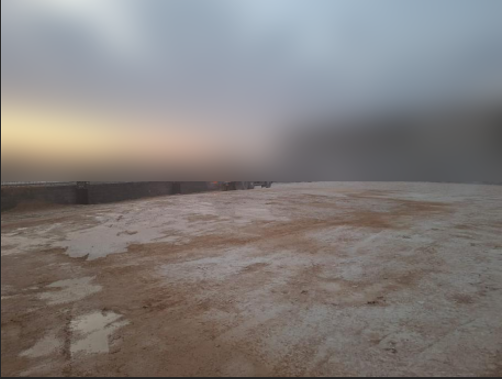
The plan included a visual guide to Moisten the soil surface In an active work area. To protect confidentiality, the image was processed to obscure building features and any details that might lead to the project.
Outputs and Results
Outputs
- A comprehensive record of dust sources associated with the construction phases.
- A set of procedures for controlling dust at the source and during transport and storage.
- A gradual spraying program depending on weather conditions and activity intensity.
- Regulations for internal roads, speeds, trucks, and site exits.
- A monitoring program for suspended particles, falling dust, and results records.
- Daily inspection checklist, corrective actions, and dust storm response plan.
- Training and personal protective equipment requirements for workers.
Outcome
The study transformed scattered dust sources into Clear management system It specifies when spraying takes place, how roads, materials, and trucks are managed, when activities stop, what is checked daily, and how observations and corrective actions are recorded. Dust management thus became part of the site’s daily operations rather than a temporary response after a complaint or emission occurred.
Technical lessons learned
The case showed that Spraying alone is not enough to manage dust.It must be integrated with speed control, road maintenance, covering materials and trucks, cleaning tires and exits, weather response, monitoring and documentation.
Furthermore, setting a fixed spraying frequency without considering temperature, wind, and surface conditions may lead to Poor water control or inefficient water consumptionTherefore, it is always advisable to build an integrated hierarchy of procedures linking the source, the path, the recipient, and the emergency response.
Frequently asked questions about dust management in construction projects
What are the sources of dust at construction sites?
Sources of dust at construction sites include: exposed surfaces and excavations, unpaved internal roads, loose materials such as sand, soil and aggregates, loading and unloading operations, truck equipment movement, dry cleaning and wind stirs the exposed surface.
How are dust emissions managed in construction projects?
It is managed through a pyramid of procedures that begins with preventing emissions at the source (wetting, covering), then regulating movement and speeds, using barriers and wet cleaning, and finally personal protective equipment, with operation linked to the weather and a flexible spraying program.
What is the optimal spraying program for dust control?
Flexible program: twice a day in normal conditions, 4 times in high heat, every two hours in moderate winds, and stopping dust-causing work during dust storms with increased intervention as needed.
Is spraying with water alone sufficient for dust management at construction sites?
No. Spraying alone is not enough and must be combined with vehicle speed control (20 km/h maximum), road maintenance, covering of loose materials and trucks, cleaning of tires and exits, weather response, and daily monitoring and documentation.
Do you need a dust management plan for your construction project?
The Environmental Dimension team is ready to assist you in assessing dust sources and preparing an integrated operational plan that complies with environmental compliance requirements. Request a free technical consultation today.
The content was reviewed by a team of environmental experts.
Environmental content at Al-Ba’ad Al-Bia’i Environmental Consulting Company is prepared and reviewed by a team of specialists in environmental studies, environmental impact assessment, environmental compliance, and environmental monitoring.
Meet the expert team